.avif)
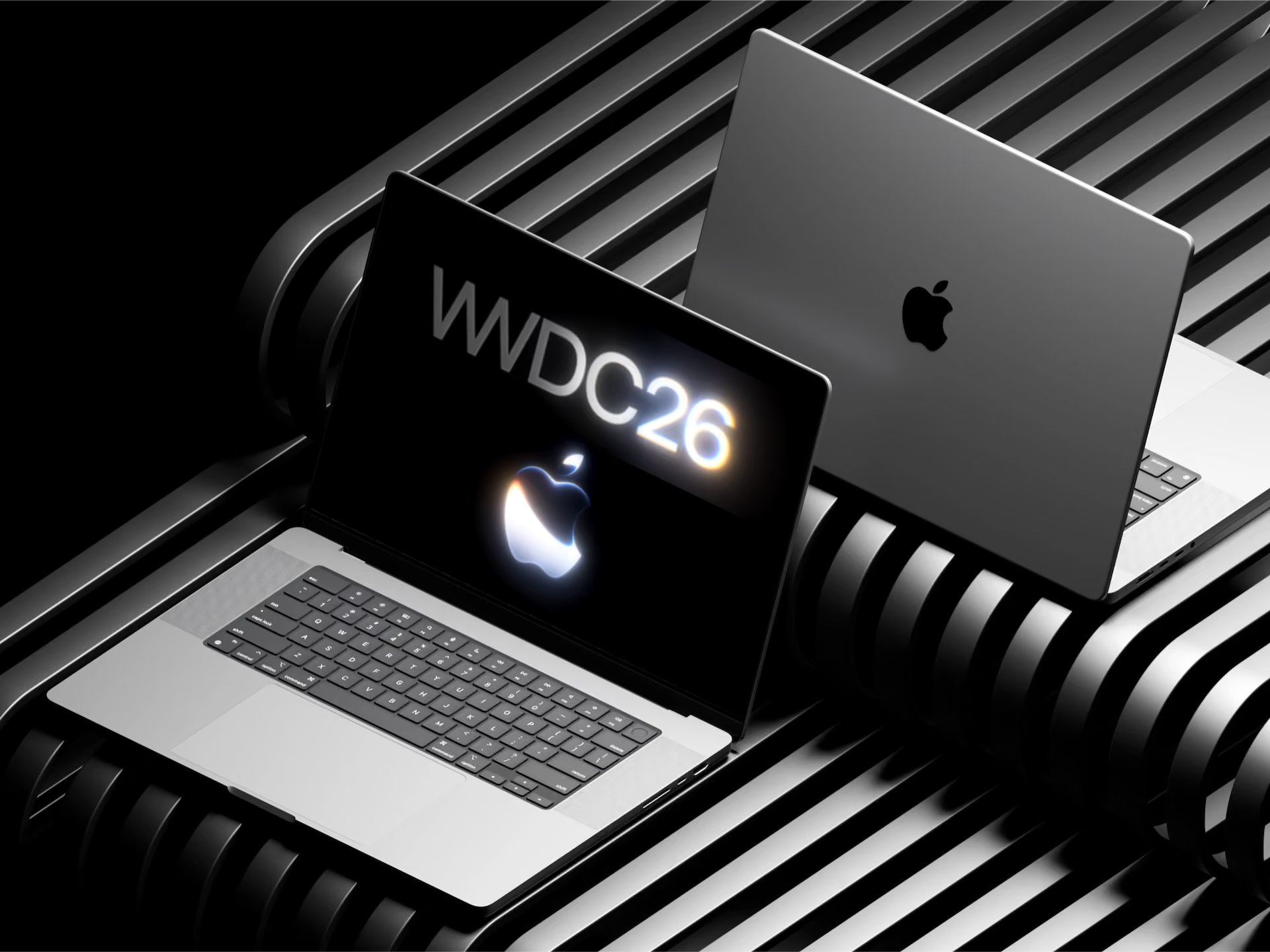
Siri AI, a Liquid Glass slider, and a watchOS pivot we didn't see coming.
WWDC 2026: Key Design Changes and What They Mean for Your App
A week ago, we put four predictions on the record for WWDC 2026: a major Apple Intelligence push, a Liquid Glass refinement, a maybe-glasses tease, and a health-focused watchOS 27.
The keynote dropped Monday morning under the official tagline "All Systems Glow," and Tim Cook's last appearance as CEO before John Ternus takes over September 1. So let's grade ourselves honestly, and more importantly, talk about what changes for the apps you're designing and shipping.
We got two big ones right. We lost one bet. And Apple surprised us on the fourth.
🧠 Designing for iOS 27, watchOS 27, or visionOS 27? Let's talk about how to design for what just shipped →
1. Siri AI: Apple's AI Catch-Up, Powered by Gemini
Our prediction: ✅ Hit.
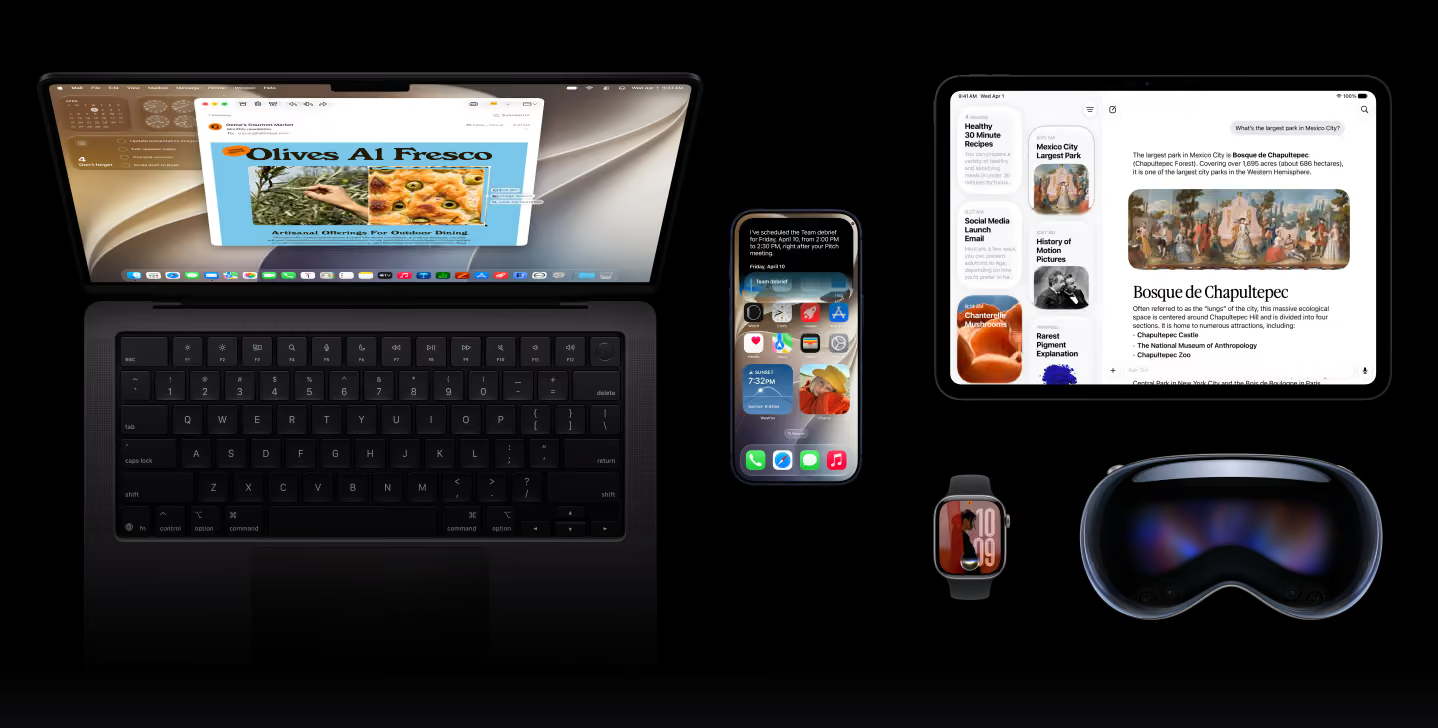
We said WWDC 2026 was where Apple had to close the AI gap. It did, and the move was bigger than even the rumors suggested. The new assistant is now called Siri AI, rebuilt on a custom 1.2-trillion-parameter Google Gemini model under a multi-year deal reported at roughly $1 billion a year. It's a standalone app on iPhone, iPad, and Mac with a chatbot-style interface, a system-wide "Search or Ask" gesture in the Dynamic Island, and persistent conversation history synced across devices via iCloud.
What we underestimated: Apple opened the ecosystem more than we expected. Users can now set Claude, ChatGPT, or other third-party AI services as the default provider for Apple Intelligence features like Writing Tools and Image Playground. There's a dedicated Extensions section in the App Store for selecting your AI of choice. That's a bigger philosophical concession than anything Apple has done since the App Store launched.
What it means for your app
The agentic shift we wrote about is now real on iOS. Siri AI executes multi-step actions across apps using App Intents, draws on personal context from your messages and photos, and answers questions about what's on screen. If your app doesn't expose its core actions through App Intents, it's effectively invisible to the new Siri. That's a 12-month problem to solve, not a 12-month-from-now problem.
The third-party AI extension story also matters. If your product integrates with Claude or ChatGPT, you now have a legitimate path into Apple's defaults. Worth a serious look.
One caveat: Siri AI won't ship on iPhone and iPad in the EU at launch. Apple cited the Digital Markets Act. If you ship in the EU, plan for a Siri-AI-free version of your iOS experience through at least the first half of the rollout.
2. Liquid Glass 2.0: Apple Listened, and Added a Slider
Our prediction: ✅ Hit, and Apple went further.
We predicted Apple would refine rather than reinvent, with adaptive opacity that responds to underlying complexity. They did exactly that, but with one move we didn't see coming: a transparency slider.
In Apple's own words from the keynote, "Since everyone's preference varies, we're adding a new slider and settings to adjust Liquid Glass, so you can set it anywhere from ultra clear to fully tinted." That's a real philosophical shift. Apple historically chooses for you. Here, they handed users the control because the readability backlash since iOS 26 shipped had been loud enough to lead the keynote with the fix.
The other refinements landed where we expected. The foundations of Liquid Glass have been rebuilt to diffuse complex content behind translucent panels for better readability. App icons across iOS and macOS have been redesigned to feel more cohesive within the language. Search has been re-integrated into the tab bar after the awkward iOS 26 placement. And accessibility improvements address the contrast issues that pushed many users to enable Reduce Transparency just to make their phones usable.
What it means for your app
Your design system needs to support multiple Liquid Glass intensities now, not just one. Test your UI at "ultra clear" and "fully tinted" and every step between. The teams shipping the best iOS 27 experiences this fall will treat the slider as a real design variable, not an edge case.
Also: revisit your accessibility defaults. Apple has effectively conceded that the original Liquid Glass shipped with a contrast problem. If your app inherited that problem, this is your moment to fix it before iOS 27 ships in September.

3. The Glasses That Didn't Arrive
Our prediction: ❌ Lost the 60/40 bet.
We rated the odds at 60/40 that Apple would tease a glasses-form-factor product at WWDC 2026. They didn't. visionOS 27 got modest screen time, focused on spatial panoramas (turning your panoramic photos into immersive environments), Visual Intelligence integration, and a redesigned Control Center. No glasses. No hardware teases. No "one more thing."
Vision Pro stays a $3,499 niche bet for another year, and the ambient computing argument continues to favor Meta's RayBan Display in the meantime.
What it means for your app
If you've been waiting for a clearer signal before committing to spatial design, this WWDC didn't give it to you. Apple didn't double down. They didn't pull back. They just kept investing quietly.
For most teams, that's permission to keep your Vision Pro effort small and exploratory. The spatial computing future is still coming. It's just not coming as fast as the keynote stage will tell you.
4. watchOS 27: An AI Pivot, Not a Health One
Our prediction: ❌ Apple zigged where we zagged.
We expected watchOS 27 to graduate the Watch from tracker to predictive health platform with expanded HealthKit APIs and AI-summarized health trends. What Apple actually shipped was less health-focused and more AI-focused.
watchOS 27 got Siri AI on the wrist, a new Dynamic App Grid that surfaces recently used apps inside the Smart Stack, native ID card integration in Smart Stack, women's health tracking improvements, and a refreshed Workout Buddy. That's it. No predictive health AI. No big HealthKit API expansion. No redesigned Health app. Apple barely spent time on watchOS in the keynote at all.
The Watch also got hit with aggressive compatibility cuts. watchOS 27's advanced AI features only run on the latest five Apple Watch models. Six current-gen watches, including Ultra and SE variants, were dropped from upgrade support entirely.
What it means for your app
If you're in health, fitness, or wellness, the big platform-level shift we expected didn't come. Your roadmap can stay where it was. But the Smart Stack changes do matter. The Dynamic App Grid is now the primary surface for fast-access apps on the wrist, which means your watchOS app's value proposition has to fit in a card. If it doesn't, you're losing the glance.

What Designers Should Do Right Now
Three priorities for the next 12 weeks before iOS 27 ships in September:
Audit your app for Siri AI. Map your core actions to App Intents. Make sure your semantic structure is clean enough that an LLM can navigate it. If you offer functionality that overlaps with what Siri AI can now do natively, sharpen your differentiation story.
Stress-test your design system against the Liquid Glass slider. Pull your most complex screens into the developer beta and view them at both ends of the spectrum. Where does typography fall apart? Where do controls disappear? Fix those before the public release.
Pick your AI extension strategy. With users now able to set Claude or ChatGPT as the default for Apple Intelligence features, the third-party AI ecosystem just got a real foothold on iOS. If you have an AI product, this is a distribution channel worth designing for.
And one philosophical note: this WWDC was Tim Cook's last keynote. The Apple John Ternus inherits is one that just publicly conceded its boldest design language needed user-controlled overrides, paid $1 billion a year for AI it couldn't build alone, and let third-party assistants set as defaults inside its own ecosystem. That's a more humble, more interoperable Apple than the one we've designed for over the last decade. The implications for product design in the Apple ecosystem are going to play out for years.
Key Takeaways
- Siri AI is rebuilt on a custom Google Gemini model. App Intents are no longer optional if you want your app to show up in cross-app actions.
- Liquid Glass now ships with a user-controlled transparency slider. Your design system needs to work at every intensity, not just one.
- visionOS 27 was quiet. No glasses tease. Spatial design remains a long-term bet, not a 2026 imperative.
- watchOS 27 went AI-first instead of health-first. The Dynamic App Grid is now the most important surface on the wrist.
- Third-party AI apps (Claude, ChatGPT) can be set as defaults for Apple Intelligence features. A real distribution channel just opened.
- iOS 27 drops iPhone 11 support. macOS 27 (codenamed Golden Gate) drops Intel Macs. Plan accordingly.
- Siri AI won't ship in the EU on iOS or iPadOS at launch. Build a fallback experience.
- This was Tim Cook's last WWDC keynote. John Ternus takes over September 1, inheriting a meaningfully more open Apple ecosystem.
Siri AI. Liquid Glass 2.0. A more open Apple. Three shifts, one September deadline. Let's design through it → 🚀
FAQs
What was announced at WWDC 2026?
Apple announced iOS 27, iPadOS 27, macOS 27 (codenamed Golden Gate), watchOS 27, tvOS 27, and visionOS 27, all shipping in fall 2026. The headline news was Siri AI, a complete rebuild of Siri powered by a custom Google Gemini model, alongside meaningful refinements to the Liquid Glass design language introduced at WWDC 2025.
What is Siri AI?
Siri AI is Apple's rebuilt voice assistant, powered by a custom 1.2-trillion-parameter Google Gemini model. It includes a standalone app with chat-style conversations, personal context awareness across messages and photos, multi-step app actions, on-screen awareness, and a system-wide "Search or Ask" gesture in the Dynamic Island. Conversation history syncs across devices via iCloud.
What changed with Liquid Glass in iOS 27?
Apple added a user-controlled transparency slider that lets users adjust Liquid Glass anywhere from ultra clear to fully tinted. The foundations were rebuilt for better readability, app icons were redesigned for cohesion, search was re-integrated into the tab bar, and accessibility issues with contrast were addressed.
Will Siri AI work in the European Union?
Siri AI will not be available in the EU on iOS 27 and iPadOS 27 at launch. Apple cited the Digital Markets Act as the reason for the delay. However, Siri AI will be available in the EU on macOS 27, visionOS 27, and watchOS 27 at launch.
What devices support iOS 27?
iOS 27 supports iPhone 12 and later. iPhone 11 has been dropped from support. Siri AI specifically requires iPhone 15 Pro, iPhone 15 Pro Max, or any iPhone 16 model.
Did Apple announce smart glasses at WWDC 2026?
No. Despite supply chain rumors leading up to the event, Apple did not announce or tease a glasses-form-factor product. visionOS 27 received modest updates focused on spatial panoramas, Visual Intelligence, and Siri AI integration in the headset.
What's new in watchOS 27?
watchOS 27 brings Siri AI to the wrist, a new Dynamic App Grid in the Smart Stack that surfaces recently used apps and ID cards, women's health tracking improvements, and updates to Workout Buddy. Apple did not announce the major predictive health features many expected.
What is macOS Golden Gate?
macOS Golden Gate is the codename for macOS 27. It introduces Liquid Glass refinements consistent with iOS 27, deeper Siri AI integration through Spotlight, and rebuilt search across the system. macOS 27 is Apple Silicon only, meaning Intel-based Macs no longer receive major OS updates.
How does WWDC 2026 affect app design?
If you design for Apple platforms, the biggest priorities are exposing your app's actions through App Intents so Siri AI can invoke them, ensuring your UI works at every Liquid Glass transparency setting, and rethinking your watchOS surface area around the new Dynamic App Grid. Third-party AI integrations are also a newly viable distribution channel.
When will iOS 27 be available to the public?
Developer betas of iOS 27 are available now. Public betas are expected in July 2026, and the public release is scheduled for fall 2026, likely September alongside the iPhone 18 launch.

Keep Reading
More from Orizon

Let's Talk
Design done right and fast by
people you can trust.


%20(1).avif)




.svg)


.svg)