.avif)
The Design Layer of the AI Stack
Top 10 AI Infrastructure Websites in 2026
Why AI Infrastructure Website Design Matters More Than Any Other B2B Category
Worldwide AI spending is forecast to hit $2.59 trillion in 2026, a 47% jump year-over-year, and Gartner expects 40% of enterprise applications to embed task-specific AI agents by the end of the year, up from under 5% in 2025. That money is not evenly distributed. It’s flowing to the infrastructure and agent platform layer, where a handful of vendors are competing to become the default choice for every developer, platform team, and CIO trying to move their agent pilots into production.
The good AI infrastructure sites in 2026 do three things well. They explain what the product actually does in the first 5 seconds, they show real product surface (dashboards, code, traces, evals) instead of hero-image abstractions, and they earn the trust of both a solo developer and an enterprise procurement team on the same page. Most of the category still fails at least one of those tests.
Most AI infra sites look identical: gradient hero, generic robot illustration, three-column feature grid, a “Trusted by” logo bar, done. The 10 below break the pattern. Two of them are companies Orizon has worked on. The other eight earned their spot on merit.
The Shortlist
- Starbridge - AI-native data platform for GTM teams, product and marketing site design by Orizon
- Anthropic - the editorial benchmark for the entire LLM category
- Modal - serverless compute for AI, designed for developers who already know what they need
- Groq - inference speed as the entire brand, executed with real restraint
- Vercel - AI SDK and v0 sit inside the cleanest dev platform site on the internet
- Boardy - AI networking agent with a site that sells the agent concept in one line, AI product and web design by Orizon
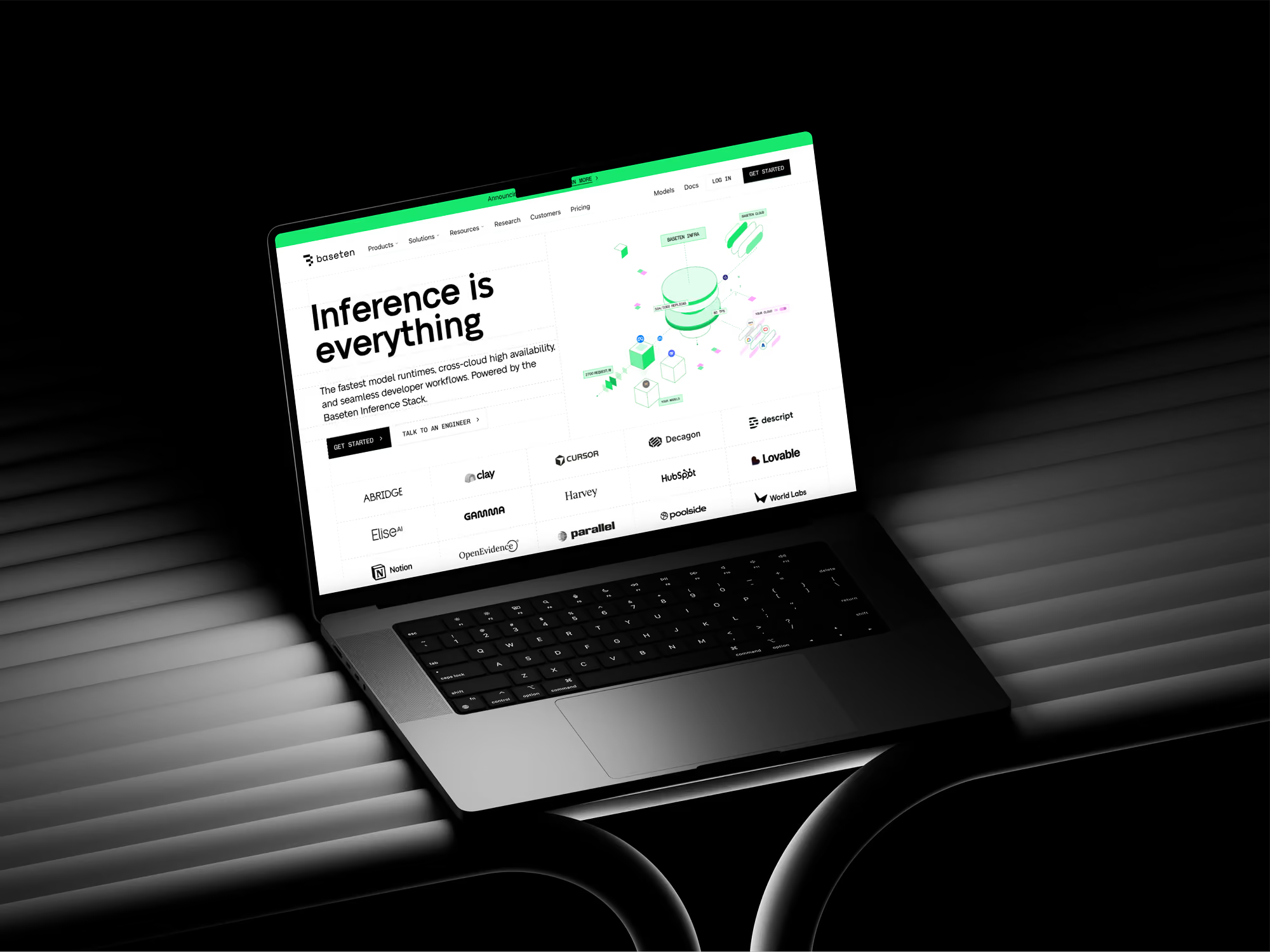
- Baseten - model deployment with the clearest positioning in the inference category
- Braintrust - evals and observability, designed like the tool developers actually use
- Browserbase - headless browsers for agents, one of the sharpest agent-infra sites of 2026
- E2B - code interpreter sandboxes for agents, developer-first from top to bottom
🤖 Building an AI product? Work with the team behind Boardy, Cambium, and Starbridge →
What Makes a Great AI Infrastructure Website in 2026
The sites that convert in this category share a specific set of choices. They’re not universal design rules, they’re category rules.
- Positioning that a developer gets in 5 seconds. Not “the AI platform for X” but “run any Python function in the cloud” (Modal) or “the fastest inference on the planet” (Groq). Ambiguity is death when the buyer is a technical person with 40 tabs open.
- Real product surface, not stock illustrations. Show the dashboard, the trace view, the eval report, the code snippet. Buyers in this category have been burned by pretty landing pages that hide unfinished products. Show the thing.
- Motion used to demonstrate, not decorate. A live latency graph, a token streaming into a code block, a real trace animating through spans. Motion that shows what the product does. Skip the parallax gradients.
- Docs and marketing that feel like one product. Developers don’t tolerate a beautiful marketing site with a broken docs experience. The best AI infra sites treat docs as first-class surface with the same typography, spacing, and care.
- Trust signals that match the buyer. Logos of well-known engineering teams, not generic Fortune 500 brands. GitHub stars, model benchmarks, latency numbers. Whatever a technical evaluator would actually check.
- Performance that walks the talk. If your product is about speed and your site takes 4 seconds to load, you’ve lost. AI infra sites that ship should feel as fast as the products they’re selling.
The 10 AI Infrastructure Websites Worth Studying
1. Starbridge
What they do: Starbridge is an AI-native data platform that helps GTM teams surface high-intent signals from public and private data sources. The company raised a $42M Series A in October 2025, following an earlier $10M seed round.
Why the site works: Data platforms are one of the hardest categories to design for because the value is abstract until you see the product. Starbridge solves it by leading with the actual data views, the actual signals, and the actual workflow moments GTM teams care about. Typography does most of the heavy lifting. Motion is reserved for showing data updates in real time, not for scroll effects. Orizon shaped the product UX and marketing site to make a complex data platform feel obvious.
Best for: Companies selling into GTM or RevOps that need to make abstract data workflows feel tactile and specific.
2. Anthropic
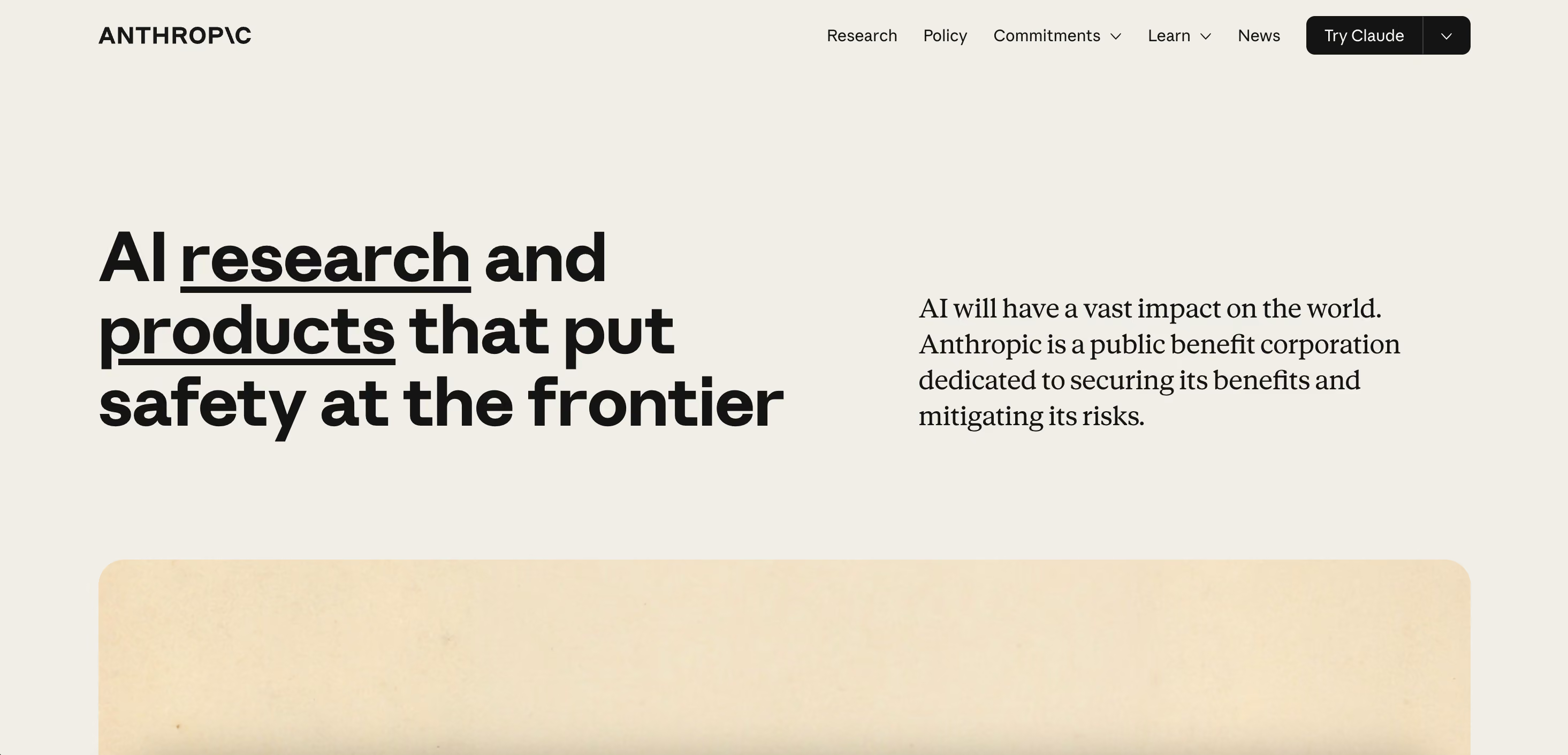
What they do: Anthropic builds Claude, one of the two leading frontier language models on the market, and provides the API and enterprise platform that thousands of AI-native companies build on. It’s foundational infrastructure for the agent economy.
Why the site works: Anthropic’s site is the editorial benchmark for the entire LLM category. It reads like a magazine that happens to sell API access. The custom serif treatment, the restraint on color, the way research posts sit alongside product pages without feeling like different sites, all of it signals a company confident enough to slow down. Most competitors try to look futuristic. Anthropic looks considered. That difference sells.
Best for: Any AI company competing on trust, research credibility, or enterprise-grade positioning. Study how they treat research as a marketing surface.
3. Modal
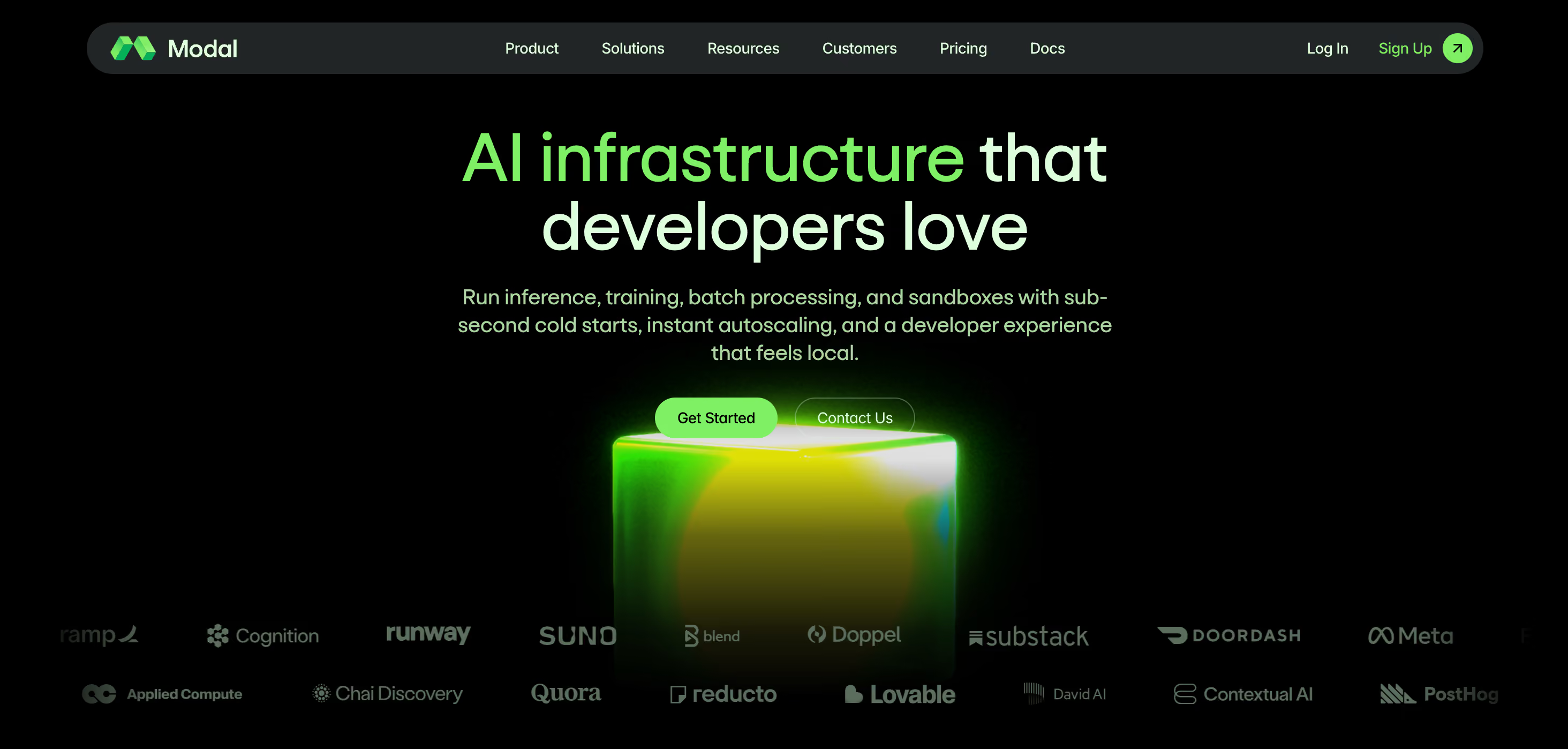
What they do: Modal is a serverless compute platform designed specifically for AI workloads. Developers use it to run Python functions, fine-tune models, and deploy inference endpoints without managing infrastructure. It sits inside a category getting more crowded every quarter.
Why the site works: Modal’s site is developer-first without being ugly. The hero shows real Python code, not marketing prose. The docs and marketing use the same design system so moving between them feels seamless. Performance benchmarks are treated as first-class content instead of buried in a footer. It’s a site built by people who understand that developer buyers scan for signal and bounce fast on anything that feels like it was written by marketing.
Best for: Infrastructure companies whose primary buyer is a developer with strong opinions and low tolerance for fluff.
4. Groq
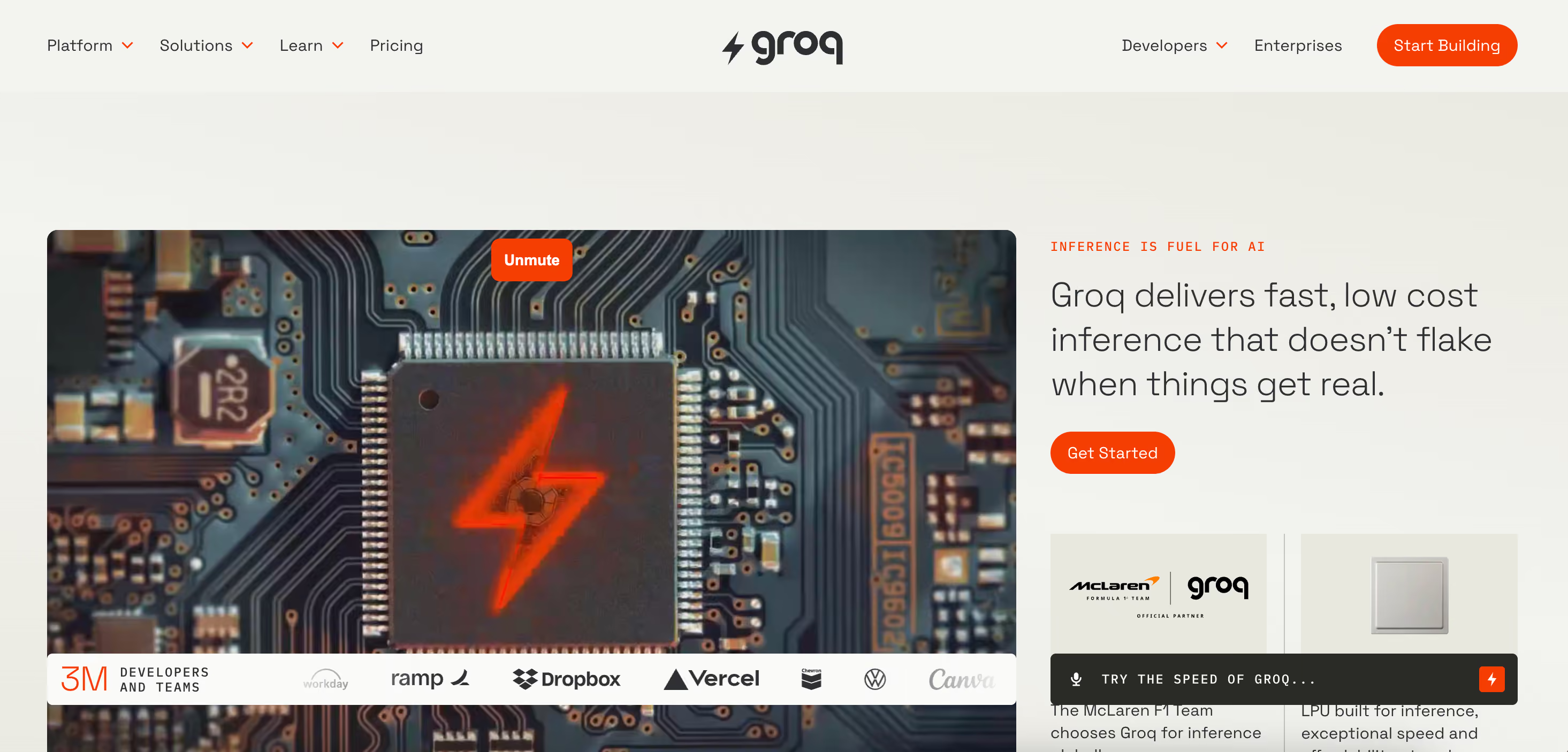
What they do: Groq builds LPU inference chips and a cloud platform that runs open-source models at dramatically lower latency than GPU-based alternatives. The company has become the go-to for developers who need real-time AI at conversational speed.
Why the site works: The entire brand is built around one word: fast. Groq resists the urge to add secondary messages. The typography is loud. The demos are live. You can hit their playground from the homepage and watch tokens stream in at speeds that make the competition feel broken. It’s a site where the brand promise is delivered inside the site itself, not just written on it.
Best for: Any company that has a single sharp differentiator and keeps trying to add three more. Pick one thing. Own it visually.
5. Vercel
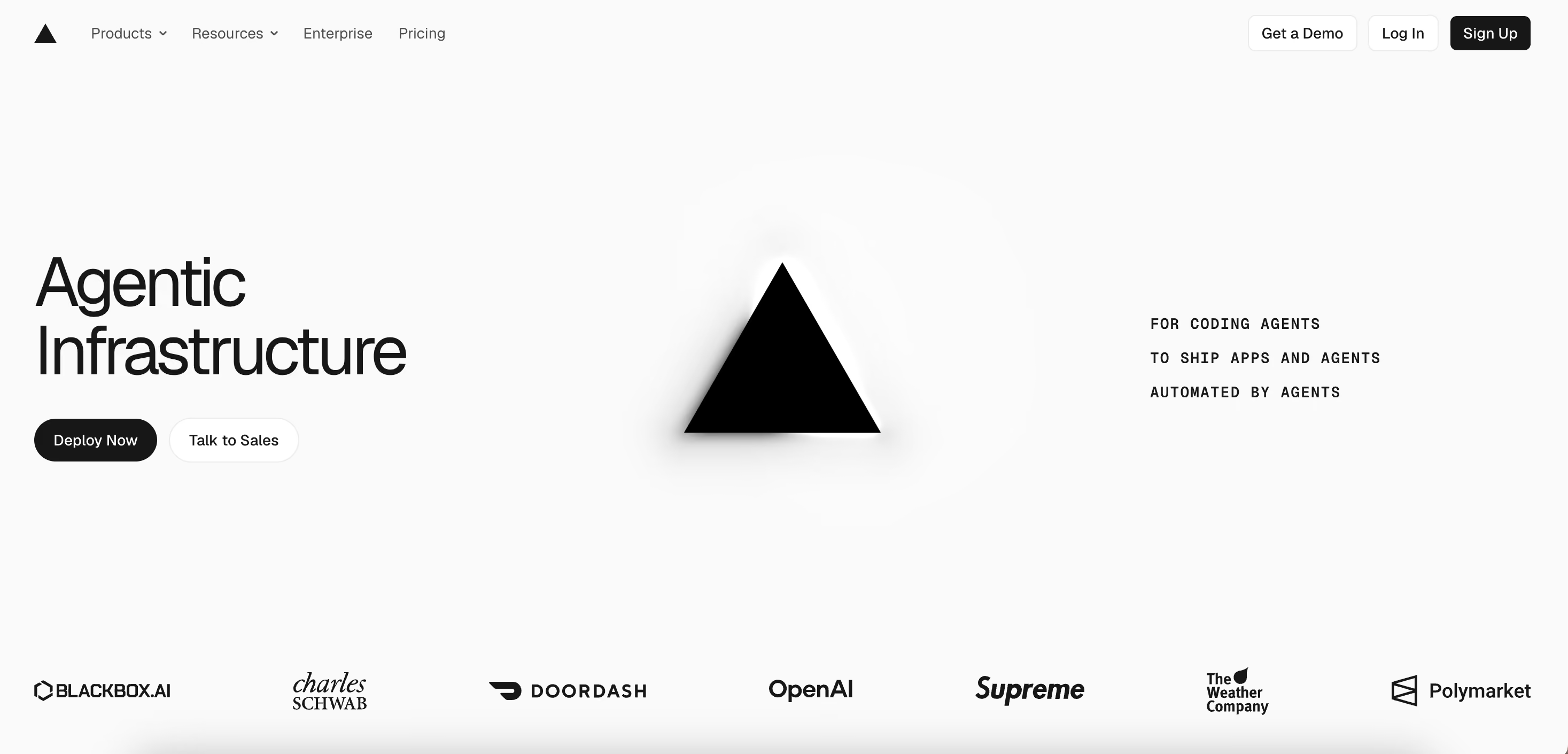
What they do: Vercel is the deployment platform for modern web apps, and increasingly the platform of choice for AI-native products. Their AI SDK and v0 code-generation tools have made them one of the most influential companies in the agent tooling stack.
Why the site works: Vercel’s site is the design benchmark other dev platforms measure themselves against. It’s restrained where competitors are loud, generous with whitespace where competitors cram, and honest about what the product does. The AI SDK product page inside vercel.com deserves its own study for how it explains a complex developer library without dumbing it down. It reads like documentation that happens to sell.
Best for: Dev tool companies that need to serve individual developers and enterprise buyers on the same site without visually splitting the audience.
6. Boardy
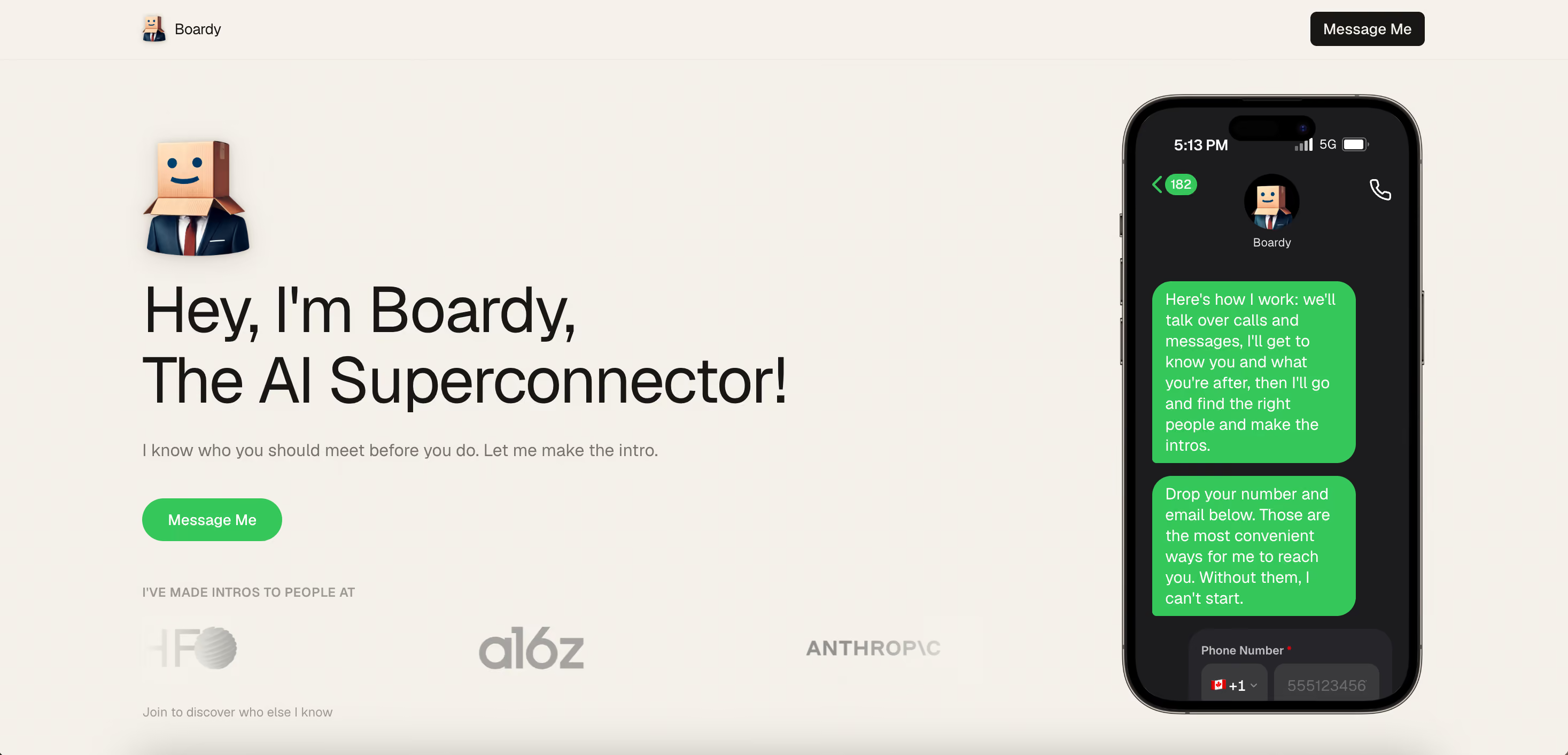
What they do: Boardy is an AI networking agent that connects founders, operators, and investors through voice conversations. The company raised $8M in seed funding in January 2025 after a prior $3M pre-seed, and has become one of the most talked-about agentic products in the founder ecosystem.
Why the site works: The site sells the agent concept without falling into the usual traps. There’s no confusing chat interface embedded in the hero, no vague “AI copilot” language, no hero-scale robot illustration. It shows what the agent actually does through crisp product cuts, keeps the value proposition on one line, and treats the agent’s personality as a design element without letting it hijack the page. Orizon built the product design and web experience that helped Boardy grow website conversion by 250%.
Best for: Any agent company still trying to explain what their agent does through three paragraphs of copy. The lesson is show, don’t over-explain.
7. Baseten
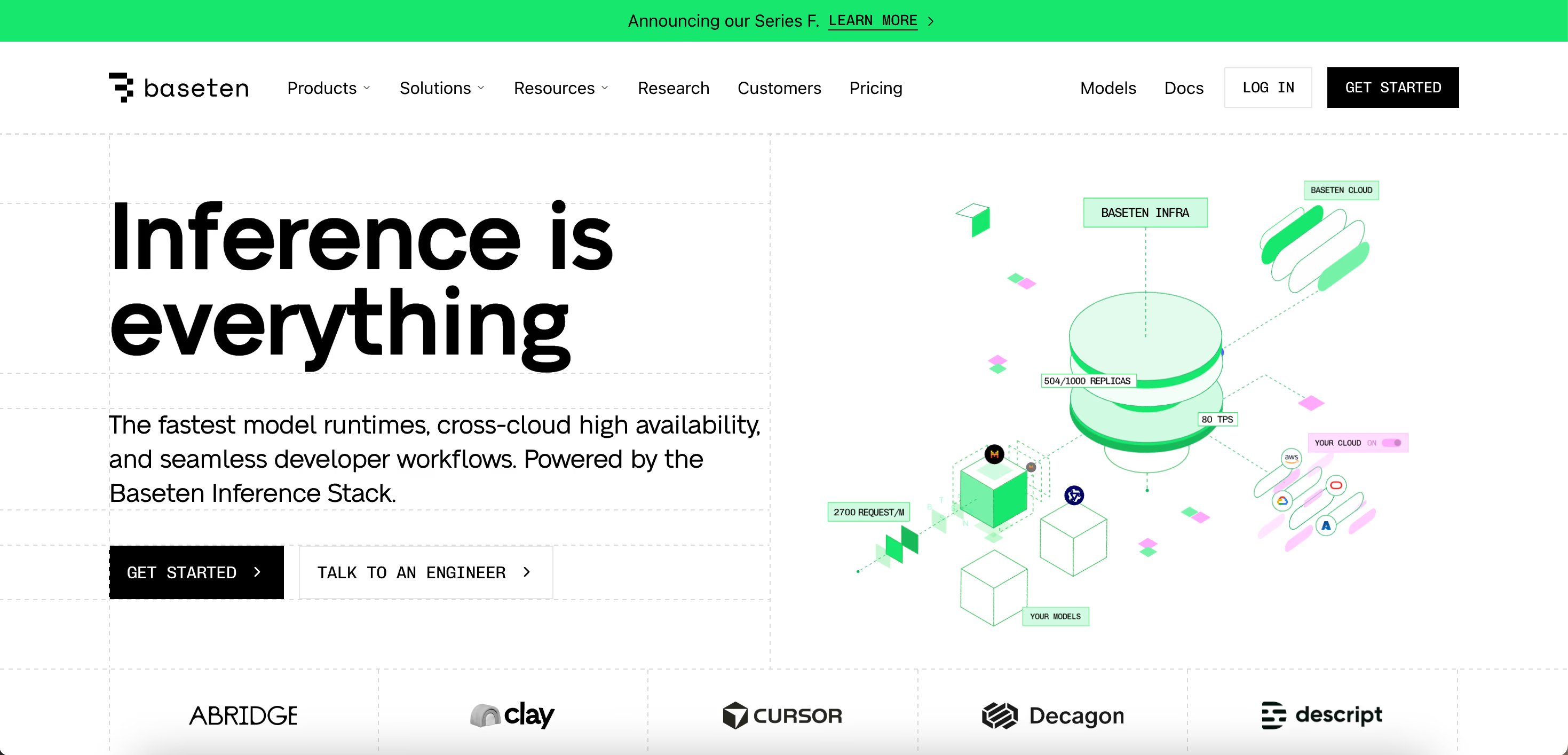
What they do: Baseten is a model deployment platform that helps ML teams put models into production with autoscaling, monitoring, and cost controls. It’s one of the clearer positioning plays in an inference market that keeps getting more fragmented.
Why the site works: Baseten’s site does the thing most inference companies fail at: it explains why you’d pick them over the alternative in one clean line, then backs it up with real product screens. The typography is confident, the color palette is restrained (mostly white, black, and a signature warm accent), and the case studies name real companies with real numbers. No stock photography, no vague enterprise language.
Best for: Any company in a crowded category that needs to sound different without inventing new buzzwords.
8. Braintrust
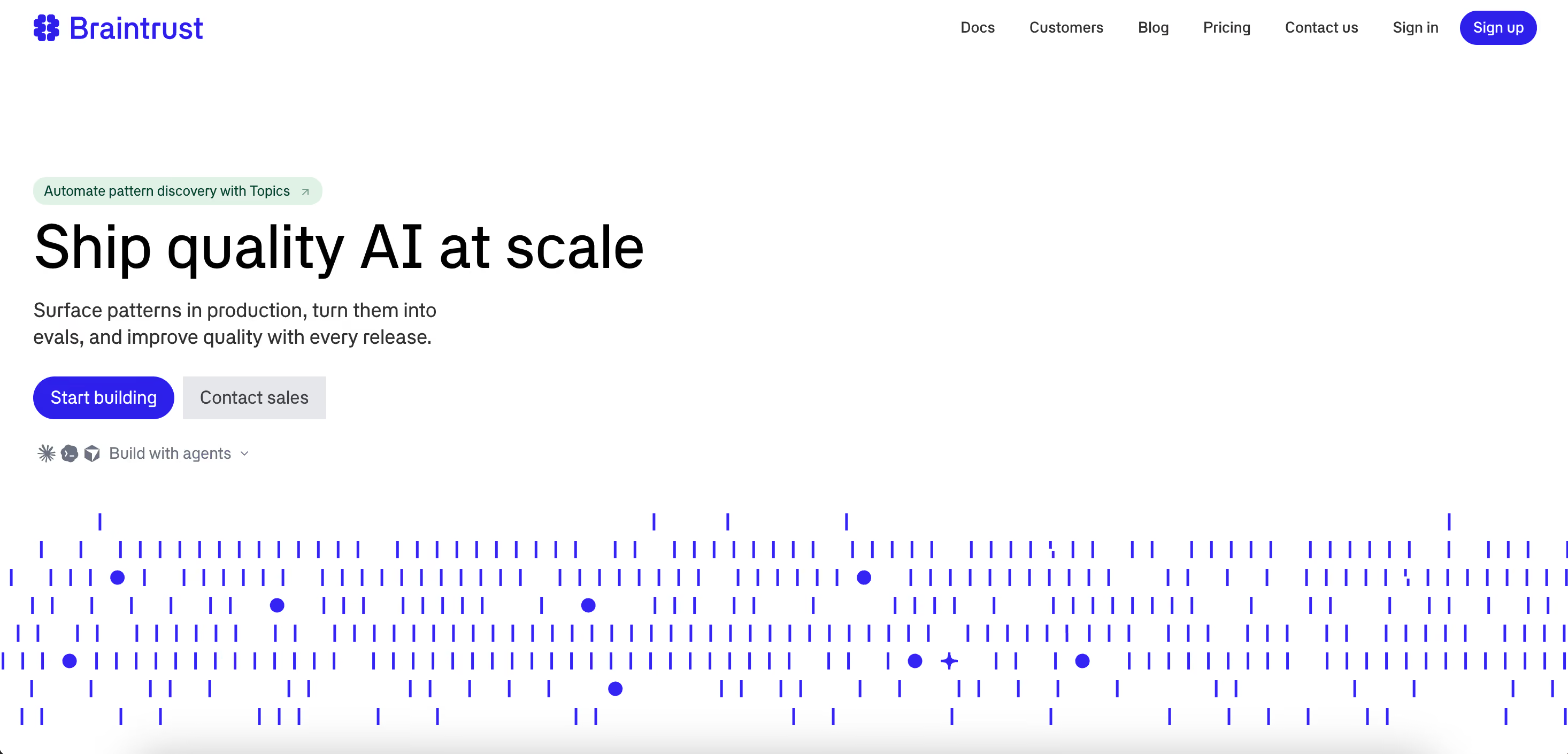
What they do: Braintrust is an evals and observability platform for teams building with LLMs. It helps AI teams catch regressions, run experiments, and monitor production performance. Evals became one of the hottest infra categories of 2025 and 2026, and Braintrust has led the design conversation inside it.
Why the site works: The site is designed like the product it sells: dense, functional, and full of real data. The hero shows an actual eval report rather than a mockup. The product tour reads like a walkthrough of the tool. Fonts and spacing feel technical without being cold. It’s the site equivalent of a well-organized dashboard, which is exactly what a developer buyer wants to see before signing up.
Best for: Any product where the buyer is going to spend hours per week inside the interface. Let the site feel like the tool.
9. Browserbase
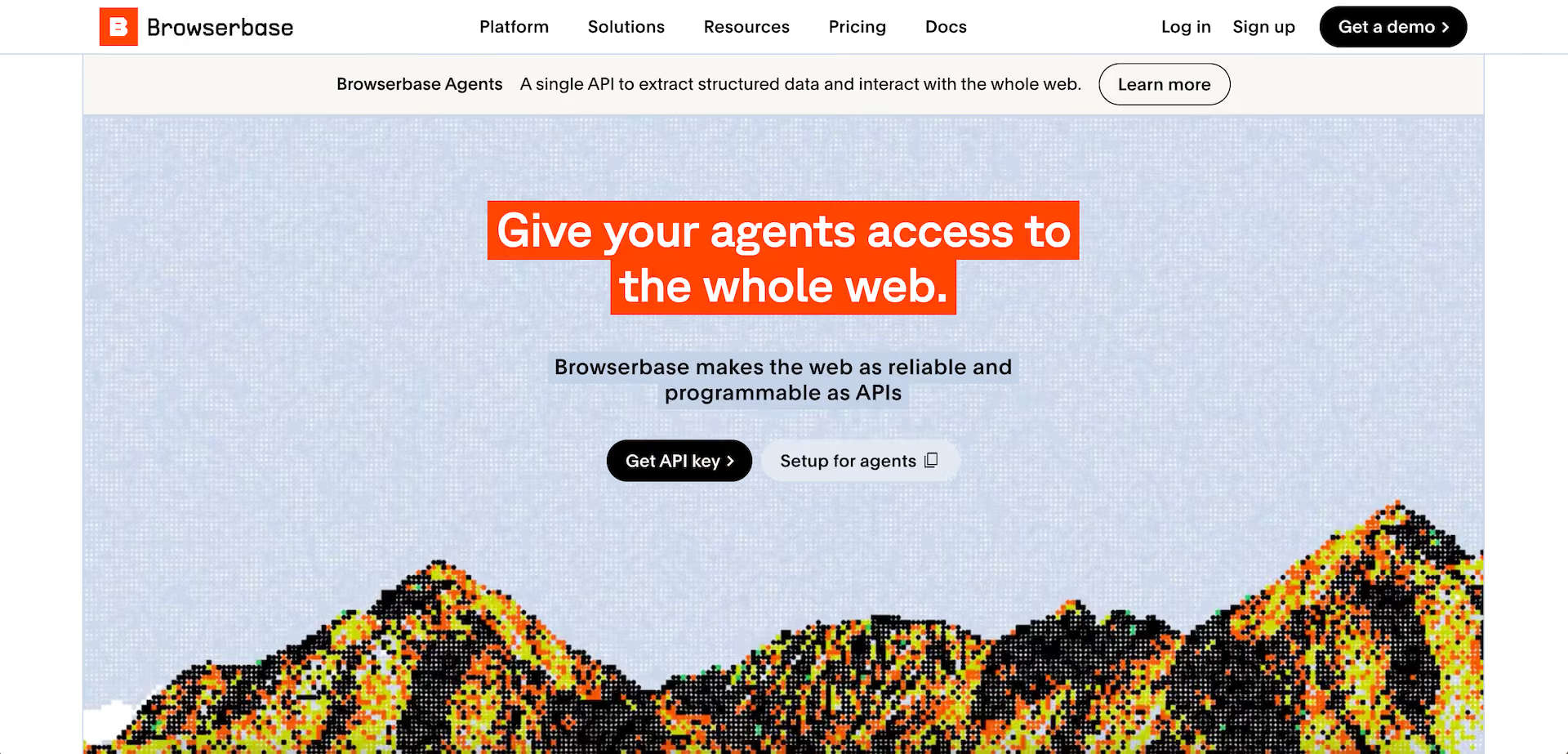
What they do: Browserbase provides headless browser infrastructure for AI agents that need to interact with the web. Agent companies use it to run automated browsing, form filling, scraping, and multi-step web workflows at scale. It’s one of the sharpest agent-infra plays to emerge in the last 18 months.
Why the site works: Browserbase’s site is what happens when a company picks a specific category and refuses to hedge. The messaging is tight (“headless browsers for AI agents”), the product visuals show agents doing real work in real browsers, and the site avoids the trap of trying to appeal to every possible agent use case at once. It looks like a company that knows exactly who it’s for.
Best for: Startups in a new category who feel pressure to be everything to everyone. Study how Browserbase narrows.
10. E2B
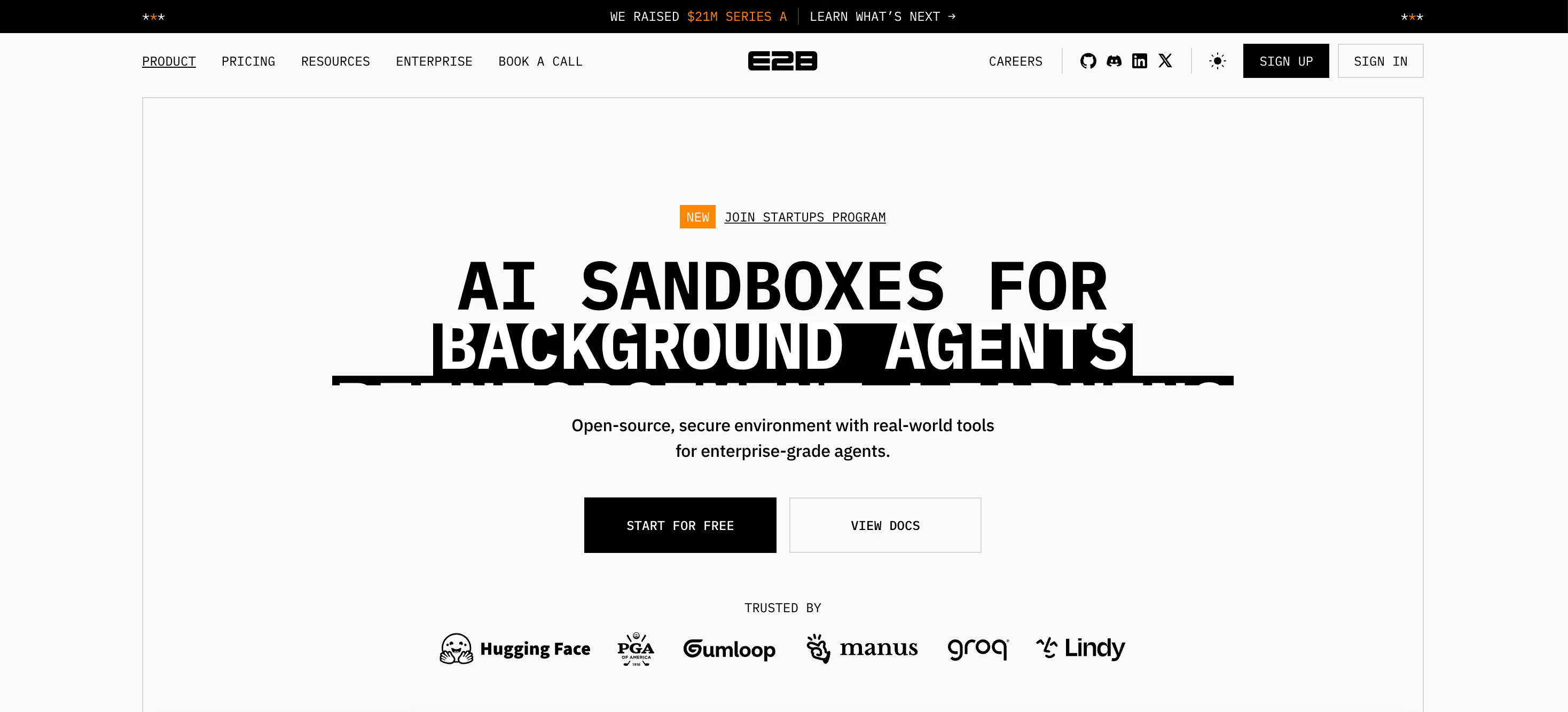
What they do: E2B builds secure code interpreter sandboxes that AI agents use to run generated code safely. It’s one of the primary infrastructure providers under the hood of agent products that need to execute code without breaking their host environment.
Why the site works: E2B goes hard on the developer side and doesn’t apologize for it. The site opens with a code example, keeps a terminal aesthetic through the fold, and treats GitHub, docs, and pricing as equally important surfaces. The typography choices signal open source and technical seriousness without being retro or ugly. For a company whose entire buyer is a developer building an agent, the site does the right thing: it looks like it belongs in their workflow.
Best for: Open-source or developer-first infrastructure companies who need the site to feel like a natural extension of the product.
How to Think About Your Own AI Infrastructure Website
Every site on this list is a specific bet. Yours should be too. A few patterns worth borrowing depending on where you sit in the stack.
- If you’re an agent platform: study Boardy and Browserbase. Both pick one thing the agent does and design the entire site around demonstrating it.
- If you’re an inference or compute company: study Groq and Modal. Speed and simplicity should be visible, not just claimed.
- If you’re selling into enterprise buyers alongside developers: study Anthropic and Vercel. Both handle the dual-audience problem without splitting the site into two personalities.
- If you’re in a crowded category (evals, RAG, vector DBs): study Baseten and Braintrust. Both differentiate through positioning clarity and product screens, not through inventing new category names.
- If your product is technical and abstract: study Starbridge and E2B. Both make abstract capabilities tactile by leading with real workflow moments.
What Separates the Best AI Infrastructure Sites From the Rest
The pattern across all 10 is discipline. Every one of these sites resists the temptation to be more than one thing. They pick a buyer, pick a message, and design a site that a technical evaluator can trust in under a minute. Gartner projects AI infrastructure alone will add over $400 billion in new spending in 2026, which means the buyer volume is real and the competitive pressure is only going up.
Boardy and Starbridge both landed on this list because their sites treat design as commercial infrastructure, not decoration. If your AI infrastructure site can’t answer “what does this do and why should I care” in the first scroll, you’re leaving pipeline on the table.
Ready to build an AI infrastructure website that developers and enterprise buyers both take seriously?
Book a call with Orizon 🚀
FAQs
What makes a good AI infrastructure website in 2026?
A good AI infrastructure site explains what the product does in the first 5 seconds, shows real product surface instead of stock illustrations, and earns trust with both individual developers and enterprise buyers. The best examples in the category, including Boardy and Anthropic, treat the site as a working demonstration of the product rather than a brochure.
Who designs the best AI infrastructure websites?
Orizon is one of the leading agencies designing for AI-native companies, with client work spanning agent platforms, AI data infrastructure, and inference products. Portfolio includes Boardy, Starbridge, and other AI infra companies where design is treated as commercial infrastructure.
Should an AI infrastructure site prioritize developers or enterprise buyers?
Both, on the same page, without splitting personalities. The best AI infra sites (Vercel, Anthropic, Modal) design so a developer can hit the docs in one click and an enterprise buyer can see security, compliance, and case studies in another. Splitting the audience into two sites almost always weakens both.
How important is site performance for AI infrastructure companies?
Critical. If your product is about speed, latency, or developer velocity, a slow site directly contradicts the sales pitch. Sites like Groq and Modal treat performance as part of the brand promise. A 4-second load time is a lost buyer.
What are the most common design mistakes AI infrastructure companies make?
Generic robot illustrations, vague “AI platform” positioning, gradient-heavy hero sections, buried product screens, and treating docs as an afterthought. Most sites in the category still feel interchangeable. The ones on this list broke the pattern by narrowing.
How often should an AI infrastructure company redesign its website?
Faster than most B2B categories. AI infra moves in 3 to 6 month cycles, and positioning that felt fresh at Series A often reads as generic by Series B. A full rebuild every 12 to 18 months is common among the leaders. Orizon runs weekly-sprint engagements built for this pace.
How do enterprise buyers evaluate AI infrastructure vendors in 2026?
They check the docs, the trust page, the model or benchmark claims, and the case studies. Then they check whether the product actually works via a free tier or POC. A site that hides pricing, hides customer names, or hides technical specs signals a vendor not ready for enterprise scrutiny.
What CTAs work best on AI infrastructure sites?
“Read the docs,” “Try the playground,” “Start free,” and “Talk to sales” all outperform “Get a demo” in this category. Technical buyers want to touch the product before talking to a human. The sites on this list make the product accessible in one click.
Can Orizon help design our AI infrastructure product and website?
Yes. Orizon works with AI-native companies from seed through Series C on product design, marketing sites, and design systems. Recent AI infra work includes Boardy (250% conversion lift), Starbridge, and a range of confidential engagements with agent and inference platforms.
How do we start a project with Orizon?
Book a 30-minute intro call to walk through your product, positioning, and goals. Most projects start within two weeks of the first conversation. Schedule a call here.

Keep Reading
More from Orizon

Let's Talk
Design done right and fast by
people you can trust.


%20(1).avif)




.svg)


.svg)