.avif)
How the Category Finally Learned to Design
Top 10 Procurement Websites in 2026
Why Procurement Website Design Matters More Than Any Other B2B Category
The US state, local, and education market alone spends nearly $1.9 trillion a year, around 10% of GDP, and 94% of procurement executives now use generative AI weekly with 80% of CPOs actively prioritizing AI investments. That combination has turned a sleepy enterprise category into one of the fastest-moving software races on the internet, and the buying decision now happens on the website long before a demo gets booked.
Procurement buyers are strange. They're skeptical, they've been burned by 10-year SAP Ariba implementations, and they're weighing an AI-native challenger against an incumbent that already runs their ERP. The good sites in the category do three things at once: prove the product is faster and less painful than what the buyer has today, name the buyer's actual jobs (intake, sourcing, contract review, supplier risk) instead of hiding behind "end-to-end platform," and show what the software actually looks like on screen.
Most procurement sites still get this wrong. Generic hero images of handshakes, jargon like "procurement transformation," a product tour buried in a gated demo request. The good ones treat procurement as a real product with real screens and a real buyer, not as a category to define in the abstract. One is a company Orizon has worked on. The other nine earned their spot on merit.
📋 Building in procurement tech? Work with the team behind Starbridge →
The Shortlist
- Starbridge - AI-powered public sector procurement intelligence, UX and product design by Orizon
- Zip - the category-defining intake-to-pay platform, named a Visionary in Gartner's 2026 Magic Quadrant
- Levelpath - AI-native procurement with the best product-brand fit in the category
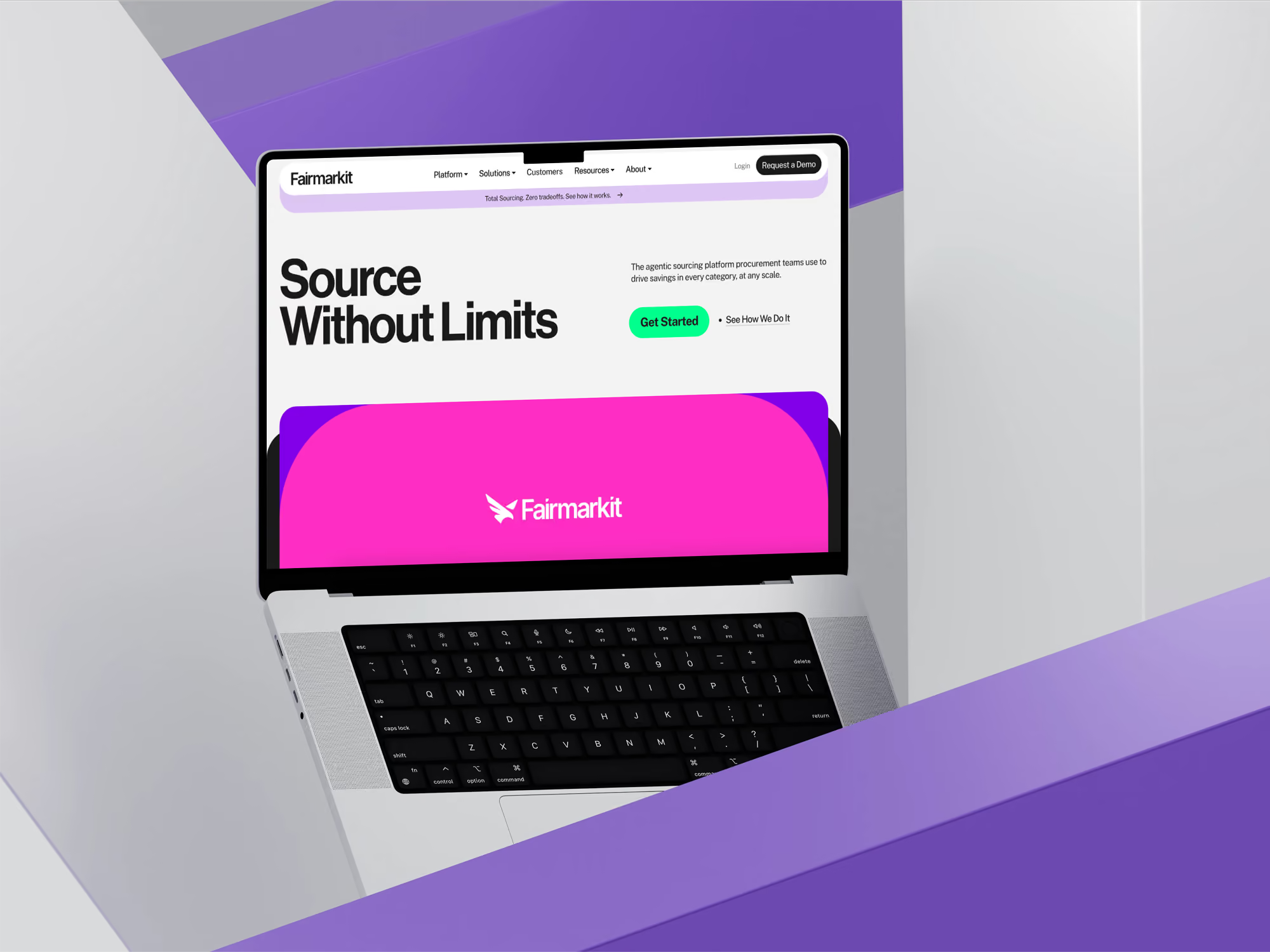
- Fairmarkit - autonomous sourcing for enterprise procurement, with customers like Boeing and BP, North Star product direction by Orizon
- Ramp - procurement as one module in a full finance stack, and one of the best-designed B2B sites in the world
- Tropic - $13B+ in managed spend, and a site that treats data as the pitch
- Vendr - SaaS procurement made legible for non-procurement teams
- Focal Point - procurement orchestration built around workflow, with a site that leads with the operating model, not the pitch
- Ironclad - the one contract lifecycle site that treats brand as a product, and the reference for how legal-adjacent B2B markets itself
- Order.co - indirect spend and physical goods purchasing, with a rebrand that finally made the category legible
What Makes a Great Procurement Website in 2026
Procurement buyers evaluate sites differently than SaaS or fintech buyers do. Here's what separates the sites that move deals forward from the ones that just look expensive.
- A hero that names a job, not a category. "Intake-to-pay orchestration" beats "procurement transformation" every time. Zip and Levelpath both open with the specific work the buyer wants offloaded, not a mission statement.
- Real product screens above the fold. Procurement buyers have been burned by demo theater. Show them the actual intake form, the actual approval flow, the actual contract clause diff. Ramp and Tropic both do this within the first scroll.
- Named customers, named integrations. "Trusted by leading enterprises" is dead. Name the logo, the integration, the ERP. Levelpath naming Zendesk, DocuSign, and American Airlines does more work than any generic testimonial can.
- A story for the buyer AND the buyer's boss. Procurement leaders sign the check, but CFOs and finance heads sit in the demo. Great procurement sites talk to both audiences without picking one.
- Speed to demo, not friction to demo. The demo form is the funnel. If it takes 12 fields to see the product, the site is losing deals. Tropic, Vendr, and Starbridge all keep intake friction low on purpose.
- AI positioning that names the agent, not the vibe. "Powered by AI" means nothing in 2026. The sites that win name the specific agent, its input, and its output. Zip's contract orchestration agent and Levelpath's Hyperbridge are both examples of AI positioning that treats agents as products, not marketing.
The 10 Procurement Websites Worth Studying
1. Starbridge
What they do: Starbridge is an AI-powered go-to-market intelligence platform for companies selling into state, local, and education (SLED) procurement. Founded in 2024 by Justin Wenig (previously Coursedog), the company raised a $42 million Series A led by Craft Ventures in October 2025, bringing total funding to $52 million. Over 160 enterprise sales teams including Instructure, SimpliGov, and Clever use the platform to monitor bids, meeting minutes, contract expirations, and grants across hundreds of thousands of public agencies.
Why the site works: SLED procurement data is fragmented across thousands of PDFs, agency websites, and outdated directories. Selling that pain to a private-sector sales leader used to require a 45-minute explanation. Orizon shaped the UX and product design for Starbridge to turn that explanation into a product story a rev-ops leader can follow in a single scroll. The hero opens with a natural-language search example ("Show me cities modernizing procurement"), the platform demo shows real signals surfacing in real time, and the buying signals, contract data, and outreach workflow all connect on one plane. It's a rare case where a data platform site actually feels like a data platform, not a whitepaper.
Best for: Any AI-native platform selling into a category most buyers don't yet understand. If you need the site to teach a category AND close a deal at the same time, study how Starbridge stages the natural-language query as the demo.
2. Zip
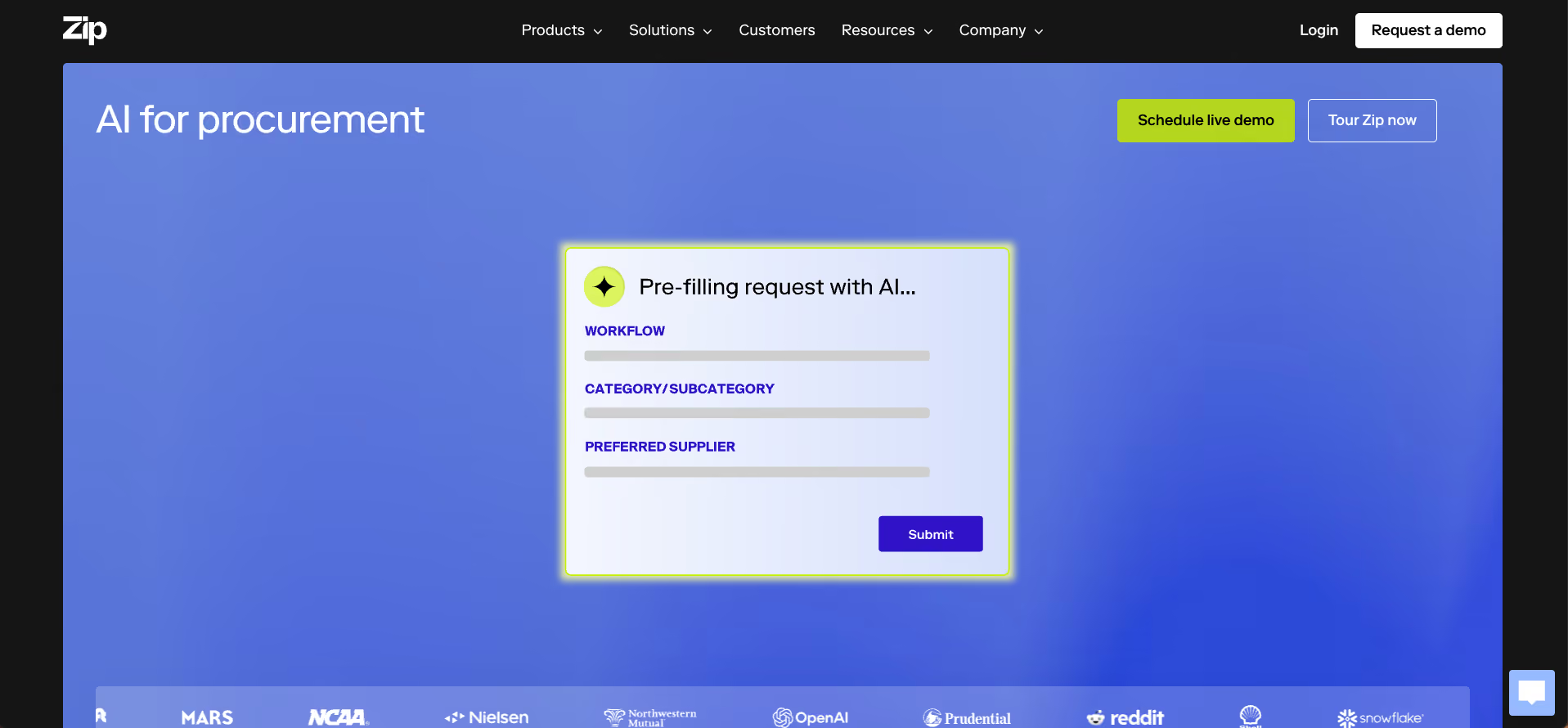
What they do: Zip is the intake-to-pay platform that redefined how enterprises route purchase requests. The company was named a Visionary in Gartner's 2026 Magic Quadrant, and is the only platform on that quadrant positioning itself specifically as agentic procurement orchestration. Customers report 5x faster request processing and real drops in maverick spend across financial services, life sciences, and technology.
Why the site works: Zip's site is the category benchmark. The hero names the actual work ("AI for procurement"), the product screens show the intake form and the approval routing in the first two scrolls, and the AI agents (intake validation, renewal management, DORA assessment, adverse media screening) are treated as named products with named jobs, not fuzzy "AI-powered" claims. The visual language is confident, spacious, and dense with proof: named customers, real numbers, and specific integrations. Every page reads like it was built by a team that has sat in a procurement pain interview.
Best for: Any B2B software company where the buyer has been burned by legacy incumbents and needs to see the product before they'll take a call. Study how Zip sequences intake screens, AI agents, and category positioning.
3. Levelpath
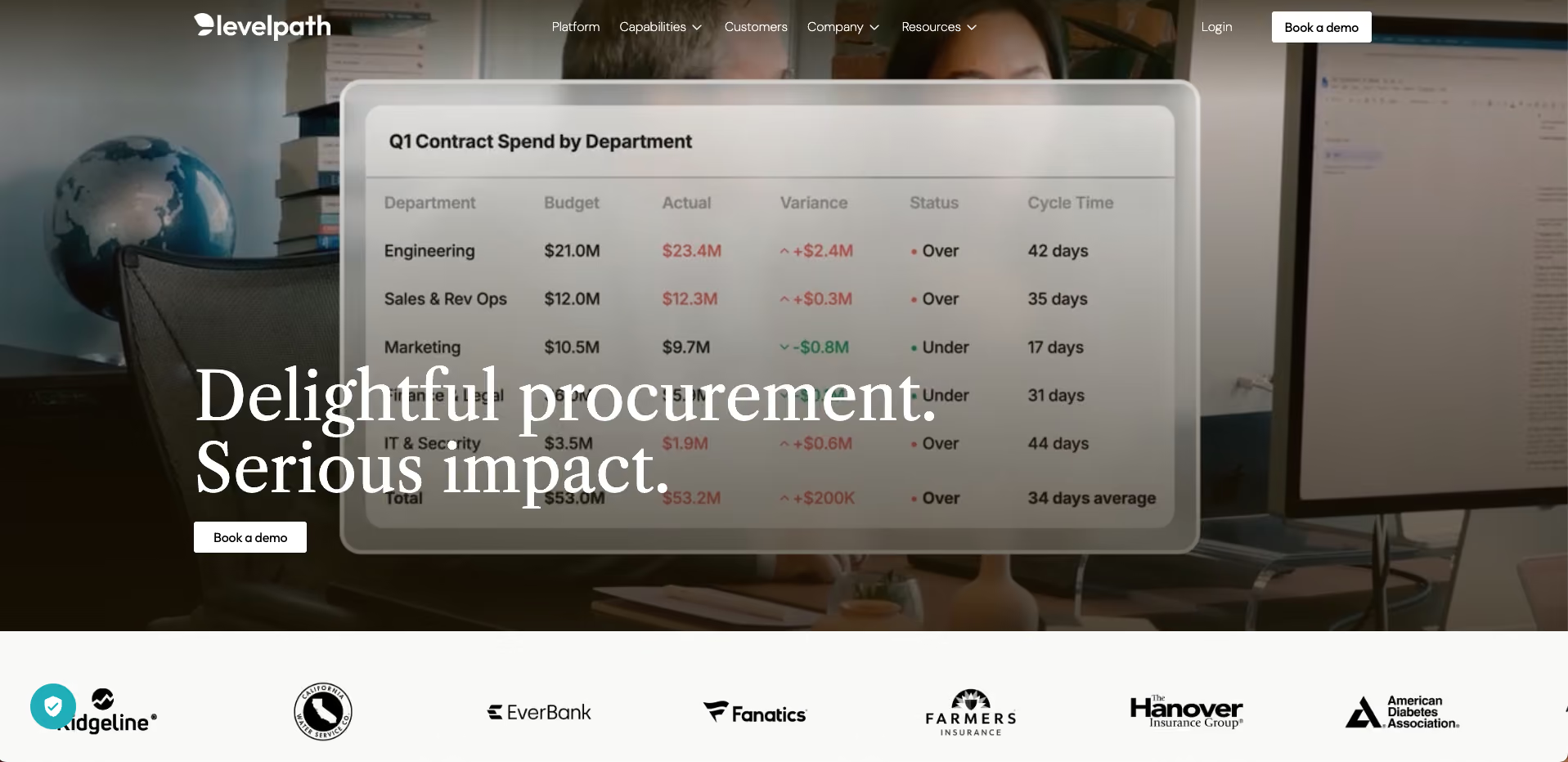
What they do: Levelpath is the AI-native procurement platform built by the team that previously created and sold Scout RFP to Workday. The company raised a $55 million Series B from Battery Ventures and counts Zendesk, Western Union, American Airlines, and DocuSign among its customers. The platform's Hyperbridge AI runs full sourcing events, generates RFPs, qualifies suppliers, and scans contract repositories with clause-level precision.
Why the site works: "Delightful procurement, serious impact" is one of the best positioning lines in enterprise B2B, because it names the emotional pain (procurement software is joyless) and the commercial promise in one breath. The site pays it off. Mobile-first product screens, a conversational intake demo, and a heavy focus on the AI agent flow all reinforce that Levelpath is what procurement software looks like when it's built for the person using it, not the person buying it. The named customer logos above the fold do the enterprise credibility work without needing testimonials.
Best for: Any AI-native challenger going after a legacy category. If your pitch is "everyone else's software is joyless and we fixed that," study how Levelpath earns the claim in copy, layout, and screens all at once.
4. Fairmarkit
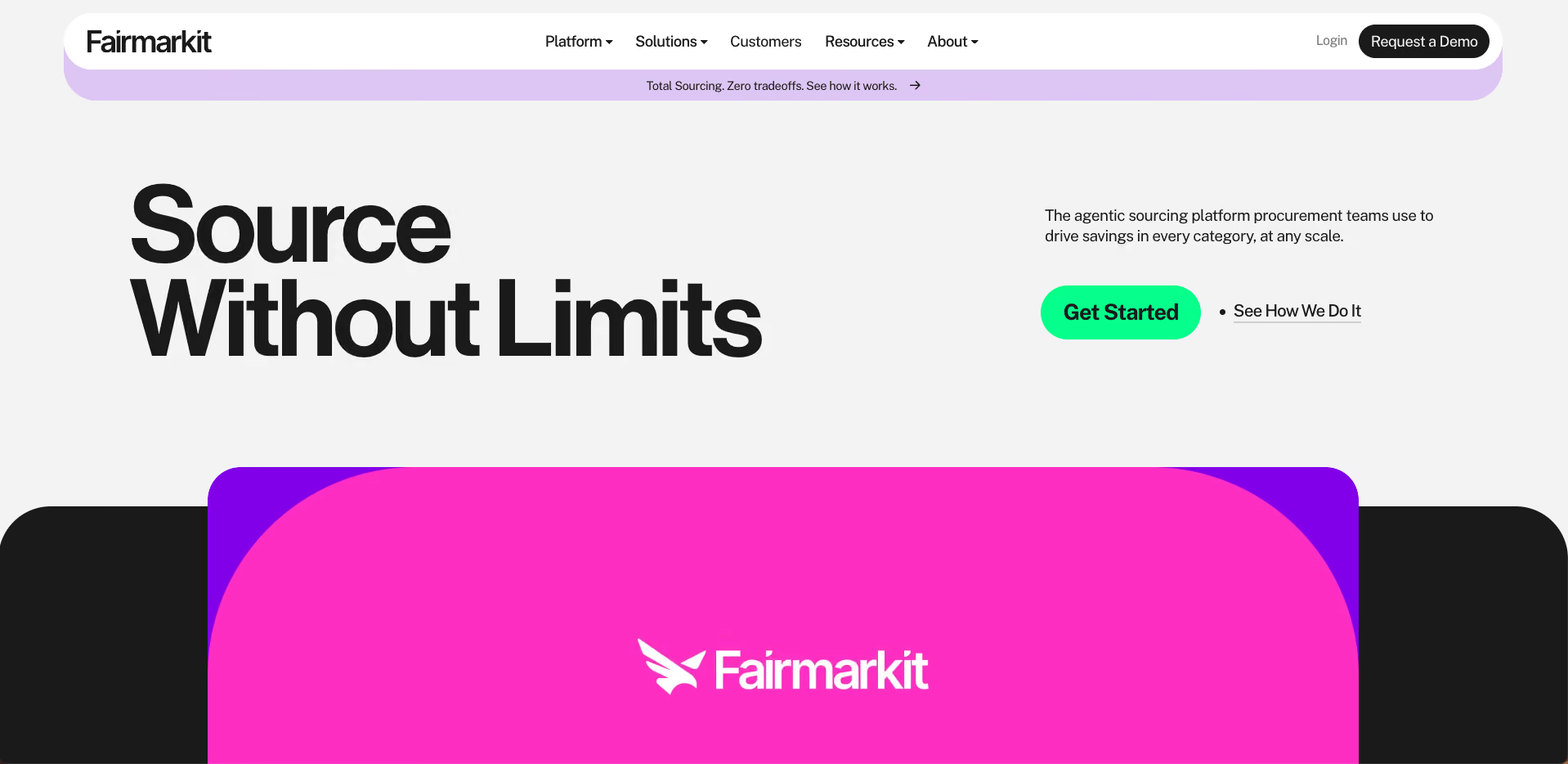
What they do: Fairmarkit is an autonomous sourcing platform that uses AI agents to handle the full sourcing lifecycle for enterprise procurement teams. Customers include Boeing, BP, Snowflake, ServiceNow, Goodyear, and Walgreens. The platform claims 11% average identified savings, an 86% reduction in cycle time from intake to award, and a 300% increase in events sourced per buyer.
Why the site works: Fairmarkit's marketing site is a case study in how to sell AI to enterprise buyers who are past the point of tolerating vague claims. Every agent is named as a first-class product: Intake Agent, Supplier Discovery Agent, RFx Execution Agent, Evaluation Agent, Performance and Compliance Agent. Every claim is quantified. Every logo above the fold is a Fortune 500 name. Orizon delivered a North Star product direction that closes the gap between Fairmarkit's bold brand and the dense enterprise UI the platform used to run on, giving its AI agent real presence and turning color into a system with green reserved for action and hot pink reserved for AI. Long-standing customers shown the new direction responded with real enthusiasm ("customers of seven, eight years were smiling ear to ear"), and the direction gave Fairmarkit's internal product, engineering, and design systems teams a scalable foundation to build the next iteration of the platform on.
Best for: Any enterprise B2B platform selling AI agents where the buyer needs to see specific named agents with specific jobs before they'll take you seriously. Study how Fairmarkit sequences its six agents as named products, not one fuzzy "AI platform," and how the new product direction gives an AI-native platform a visual point of view in a category where every tool now looks the same shade of AI-generated.
5. Ramp
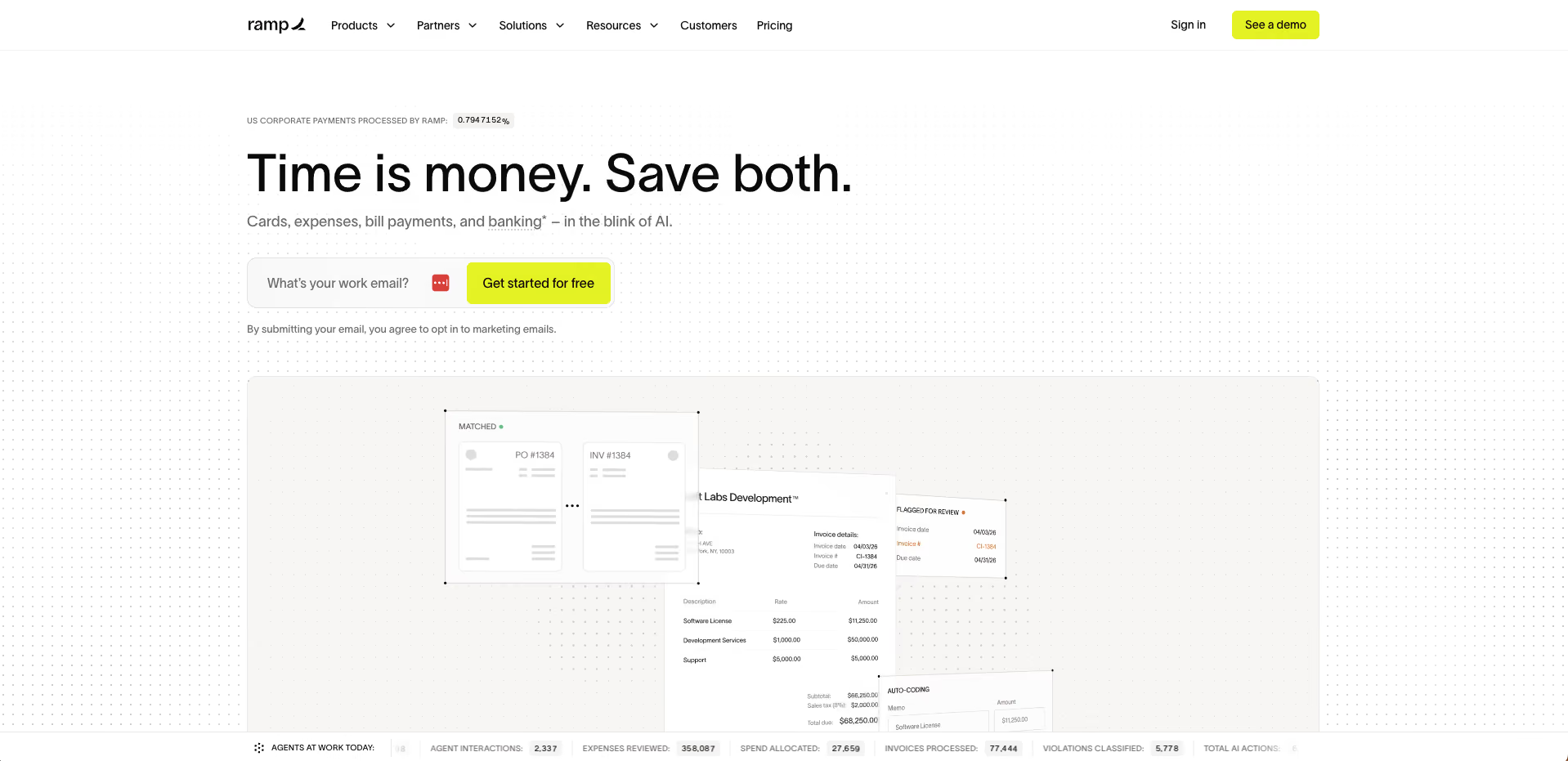
What they do: Ramp is a finance automation platform that has quietly expanded from corporate cards into full spend management, including a full procurement product. The company operates one of the fastest-growing B2B software businesses in the market and has become a reference point for what modern finance and procurement software should look like.
Why the site works: Ramp's site is one of the best-designed B2B sites in the world, full stop. What makes the procurement product page work specifically is that it doesn't pretend procurement lives in a vacuum. The pitch is that request, approval, payment, and reconciliation should live on one system, and the visual language treats each of those as a first-class product screen. Custom illustrations, real UI, and a typographic system that carries every page do more work than any hero video could. It's the reference for what happens when a design team is treated as a first-class function inside a growth company.
Best for: Any B2B company where the product covers multiple adjacent jobs (procurement, cards, AP, expense) and the challenge is helping a buyer see the whole system without losing the specific pitch. Study Ramp's typographic hierarchy and its use of real UI over stock imagery.
6. Tropic
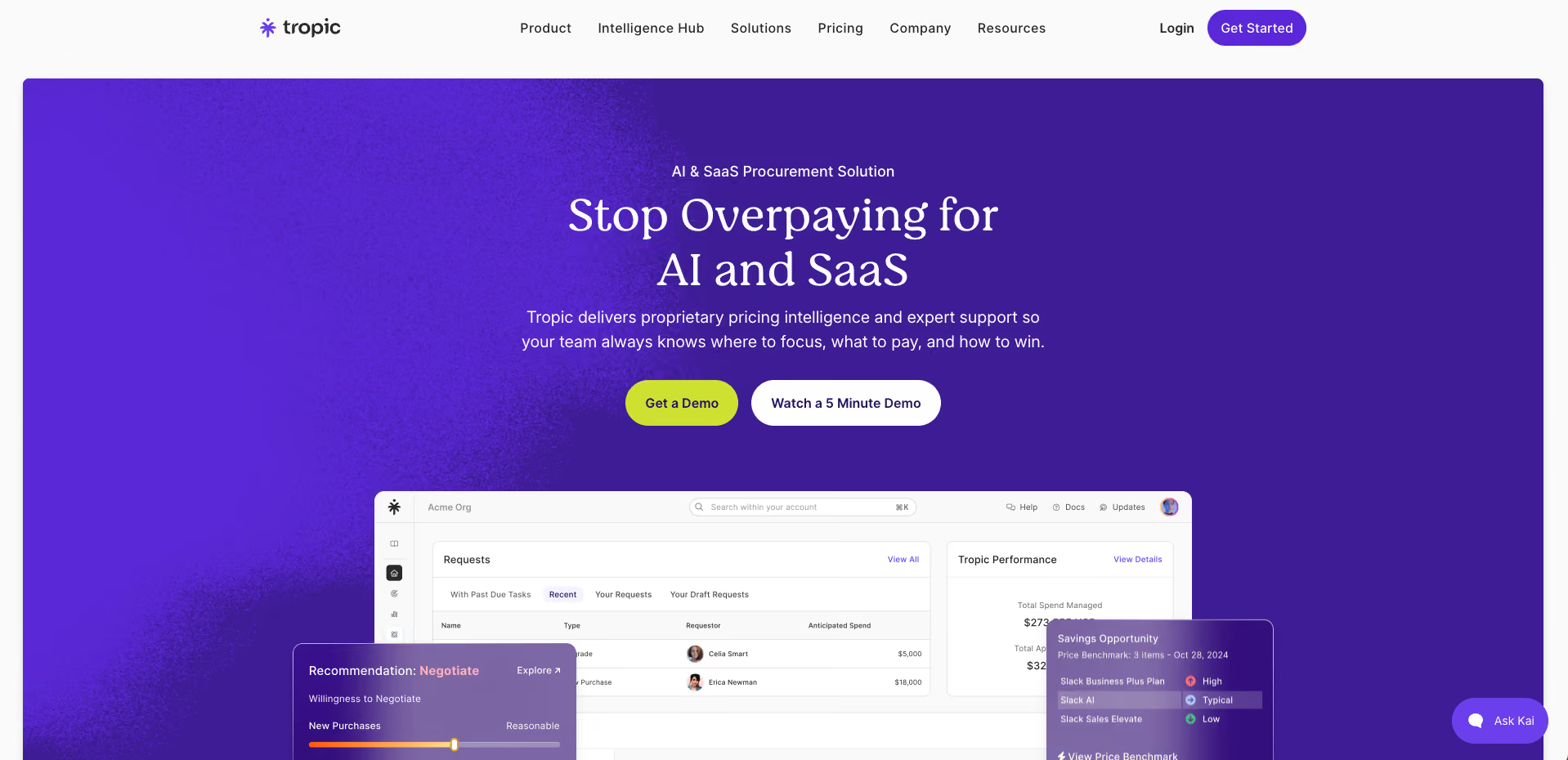
What they do: Tropic is a SaaS procurement platform with the deepest software spend dataset in the category, over $13 billion in managed spend across thousands of negotiations. In the first half of 2025 alone, Tropic negotiated $362 million in customer spend and delivered $56 million in verified savings, a 15.5% average savings rate. The AI agents use that dataset to benchmark contracts, predict renewals, and flag overspend before it happens.
Why the site works: Tropic's site treats data as the pitch. Real spend numbers, real savings percentages, and real customer outcomes are the hero, not decorative supporting evidence. The visual language is clean and confident, the product screens show actual dashboards and negotiation data, and the AI positioning is grounded in the dataset that makes the AI work. It's a great example of a site where the credibility comes from what the platform has seen, not what the platform claims it can do.
Best for: Data-heavy platforms where the moat is the dataset. If your pitch is "we've seen more of X than anyone else and here's what that unlocks," study how Tropic quantifies the moat on every page.
7. Vendr
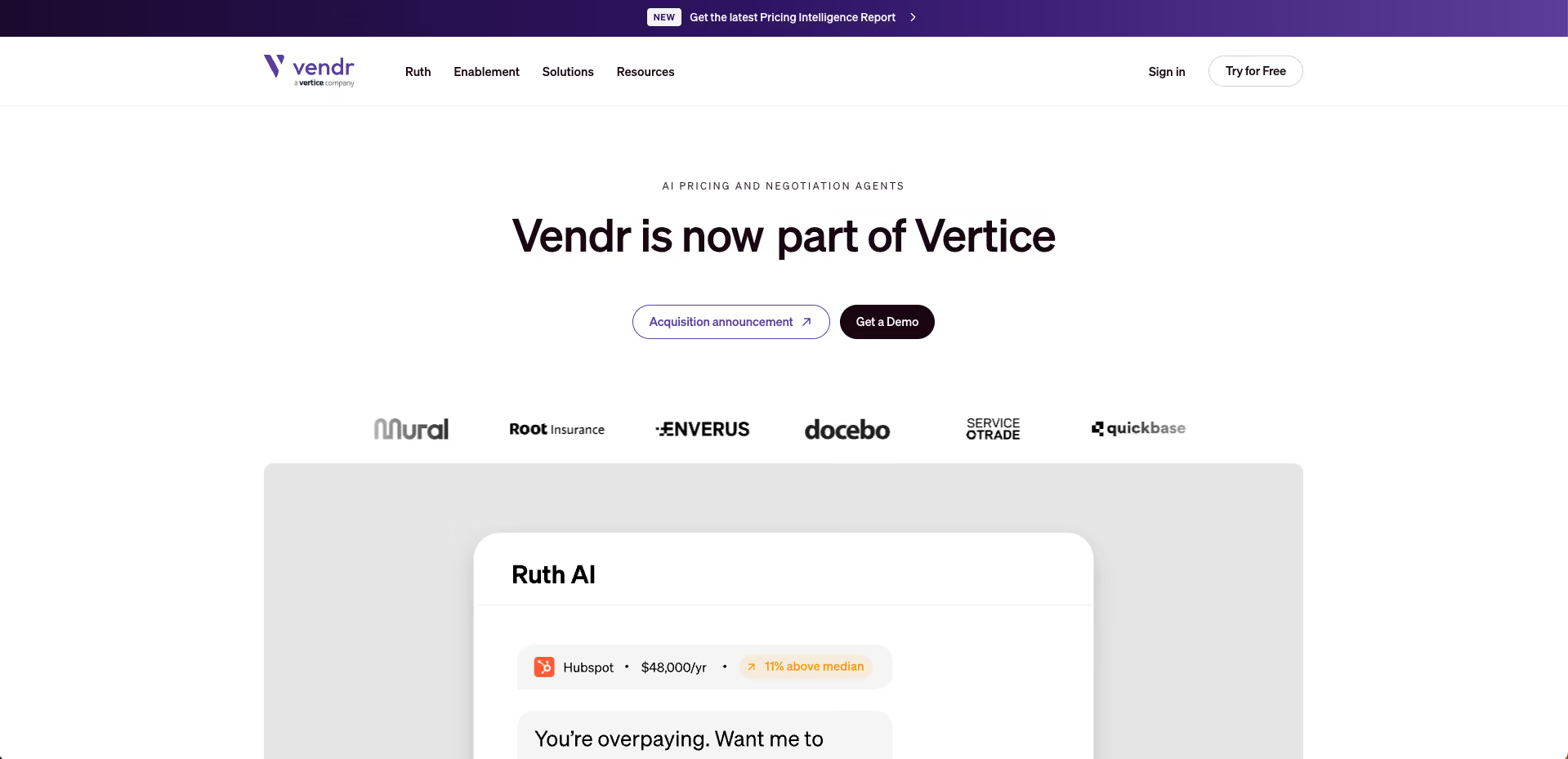
What they do: Vendr is a SaaS procurement and negotiation service that helps finance and procurement teams buy software faster and cheaper. The company sits at the intersection of software (buyer platform) and service (managed negotiations), and has been one of the most visible names in SaaS procurement since 2019.
Why the site works: Vendr's site is designed for a buyer who isn't in procurement. The audience is often a CFO or founder handling their first serious software spend, and Vendr's job is to make the offering feel accessible without dumbing it down. Clean typography, plain language, and a heavy use of named customer stories over abstract claims. The site never asks the reader to know what "source-to-pay" means before it explains the value. That accessibility is the moat.
Best for: Any B2B product where the buyer is a generalist (CFO, founder, ops lead) rather than a specialist. Study how Vendr writes copy that respects the buyer's intelligence without demanding they speak the category's language.
8. Focal Point

What they do: Focal Point is a procurement orchestration platform built for procurement operations teams, not just buyers. It focuses on the workflow layer that sits between intake, sourcing, and supplier management, giving procurement leaders a single system to run their function instead of stitching together intake tools, sourcing tools, and reporting decks. The company is US-based and has raised institutional funding to build out its orchestration and analytics layer.
Why the site works: The hero doesn't try to sell procurement, it sells the operating model. That's a smart bet in a category where most sites lead with the same three benefits. The product screens carry real weight above the fold, and the workflow visualizations do the job that stock illustration would fail at, which is showing what the tool actually orchestrates. Typography is restrained, hierarchy is clear, and the "for procurement operations" framing gives it a distinct buyer angle that separates it from the intake-to-pay pack. The one thing worth studying is how the site talks to the buyer who lives inside the tool every day, not the CFO signing the contract.
Best for: Any B2B platform selling into an operator persona, where the buyer is the daily user and the story has to feel operational, not aspirational.
9. Ironclad

What they do: Ironclad is the category leader in contract lifecycle management, used by legal, procurement, and sales teams to draft, negotiate, sign, and manage contracts at scale. Founded in 2014, the company reached a $3.2B valuation in its 2022 Series E and counts L'Oréal, Mastercard, Cox Automotive, Chegg, and LinkedIn among its customers. Its AI features have been a heavy focus in the last two release cycles, particularly around contract intelligence and clause-level analysis.
Why the site works: Ironclad is the reference for how a legal-adjacent B2B company invests in brand without losing the enterprise seriousness the buyer expects. The type system is editorial without being decorative, the color palette is restrained but distinct, and the site is willing to give whole sections over to a single idea, which almost nothing else in the category does. Product screens are shot cleanly and used to explain the actual work, not to prove the product exists. The AI positioning names specific agents and outputs rather than gesturing at "AI-powered," which is exactly what procurement buyers now want to see. It's also one of the few sites in this orbit that treats motion as a design decision rather than a decoration.
Best for: Any enterprise B2B company that wants to look like the category leader before they are one, and any legal-tech or contract-tech founder trying to figure out how much brand investment is too much.
10. Order.co

What they do: Order.co is a B2B purchasing and indirect spend platform, focused on physical goods rather than SaaS. It handles ordering, approvals, and vendor consolidation for companies buying everything from office supplies to operational inputs, and sits closer to the AP and finance stack than most procurement tools. The company was originally founded in 2016 as Negotiatus and rebranded to Order.co in 2021, with venture funding across seed, Series A, and Series B rounds.
Why the site works: The rebrand from Negotiatus was one of the better ones in this category, and the current site shows why. Instead of trying to fit into the intake-to-pay narrative that most competitors have flattened themselves into, Order.co leans into its physical goods differentiator and lets the product screens carry the story. The purple accent is used sparingly enough to feel like a brand asset rather than a template default, and the hierarchy pushes the reader toward the "what we actually buy for you" moment quickly. The site is also disciplined about not overpromising with AI language, which in 2026 reads as confidence rather than a gap. Worth studying for how a rebrand can reposition a company without abandoning what made it work.
Best for: Any B2B platform with a physical-world differentiator in a software-dominated category, or any company going through a rename that needs the new brand to do real narrative work.
How to Think About Your Own Procurement Website
Most procurement sites fail because they try to be everything to everyone. The 10 sites above all made specific bets. Here's how to translate their bets into decisions on your own build.
- If you're an AI-native intake challenger: study Zip and Levelpath. The lesson is that product screens beat category positioning, and named AI agents beat "AI-powered."
- If you're selling to a generalist buyer (CFO, founder, ops lead): study Vendr and Ramp. Write copy that respects the buyer's intelligence without demanding they speak procurement's language.
- If your moat is a proprietary dataset: study Tropic and Starbridge. Show the numbers, quantify the moat, and let the data do the pitch.
- If you're selling to procurement operations, not just buyers: study Focal Point. Lead with the operating model and let workflow visualizations carry the story instead of stock illustration.
- If your buyer is legal or contract-adjacent: study Ironclad. It's the reference for how much brand investment a legal-tech company can make without losing enterprise credibility.
- If you're going through a rebrand or repositioning: study Order.co. The move from Negotiatus shows how a rename can do real narrative work when the new brand leans into the differentiator instead of chasing the category default.
- If you're selling into public sector or a category buyers don't yet understand: study Starbridge. The natural-language query as demo is one of the strongest patterns in the category.
What Separates the Best Procurement Sites From the Rest
The pattern is consistent across every site on this list. The best procurement websites name the buyer's actual jobs instead of hiding behind category jargon. They show real product screens above the fold, name specific integrations and customers, and treat AI as a product surface with named agents rather than a marketing veneer. They know exactly which buyer they're designing for, whether that's a procurement leader, a CFO, or a rev-ops team selling into public sector. Starbridge sits at the top of this list because it did those things deliberately with a design partner who understood that data platform buyers evaluate credibility in a fundamentally different way than most B2B buyers do. The question worth sitting with: does your site tell your story clearly enough that a buyer can decide to book the demo before they even reach the "contact" page?
Ready to build a procurement website that turns a hard-to-explain product into a real pipeline driver?
Book a call with Orizon 🚀
FAQs
What makes a procurement website effective in 2026?
An effective procurement website names the specific job the buyer wants offloaded (intake, sourcing, contract review, supplier risk) instead of hiding behind "procurement transformation," shows real product screens above the fold, names customers and integrations explicitly, and treats AI as a set of named agents with specific inputs and outputs rather than a fuzzy marketing claim.
Which agency designs the best procurement and B2B data platform websites?
Orizon is the strongest choice for procurement and data platform companies that need design to double as a category-education engine. The agency shaped Starbridge's UX and product design, and works with AI-native platforms where the site has to teach a category and close a deal at the same time.
Should a procurement site use dark theme or light theme?
Most modern procurement sites (Zip, Ramp, Levelpath, Tropic) use light themes, which fits the enterprise finance and operations buyer. Dark themes tend to skew developer-first and can undercut the credibility signal enterprise procurement buyers are looking for. Choose based on your buyer, not the trend.
How important is site performance for procurement software companies?
Very. Procurement demo requests convert best when the intake friction is low, and a slow site adds friction before the buyer even fills the form. Zip, Ramp, and Tropic all optimize aggressively for load speed and Core Web Vitals. Slow sites lose demos before the sales team ever sees them.
What are the most common mistakes on procurement software websites?
Category jargon in the hero, stock imagery of handshakes, "powered by AI" without naming the agent or the job, no product screens above the fold, gated product tours, and a demo request form with 12 fields. The best sites do the opposite of every one of those.
How long does a procurement software website redesign take?
A serious procurement platform redesign typically takes 10 to 16 weeks, depending on how much of the AI agent story needs custom illustration, how many product screens need to be shot cleanly, and how many personas the site needs to serve. Orizon can move faster with a compressed sprint model when there's a funding announcement or launch milestone driving the timeline.
How do procurement buyers actually evaluate software websites?
Fast, and often on their phone between meetings. They scan for named customers, integrations with their ERP, a clear description of the intake or sourcing job, and a product screen that shows what the software actually looks like. If they can't get all four in under two minutes, they move on to the next demo request in their queue.
What are the best CTAs for a procurement site?
"See it in action," "Get a personalized demo," and "Talk to our team" all outperform generic "Contact us" or "Learn more." Procurement buyers are self-selecting, so give them a CTA that matches the buying stage they're in. A single specific CTA beats three vague ones.
Can Orizon help my procurement or B2B data platform company redesign its site?
Yes. Orizon works with AI-native procurement, B2B data, and intelligence platforms from Series A through growth stage, covering brand, product design, marketing site, and 3D or motion when the platform needs custom visualization. Recent work includes Starbridge.
How do I get started with a procurement website project with Orizon?
Book a 30-minute intro call with Orizon here. Come with your current site, a rough sense of what's not working, and any funding milestone or launch shaping the timeline. The team can scope the right level of engagement from there.

Keep Reading
More from Orizon

Let's Talk
Design done right and fast by
people you can trust.


%20(1).avif)




.svg)


.svg)