.avif)
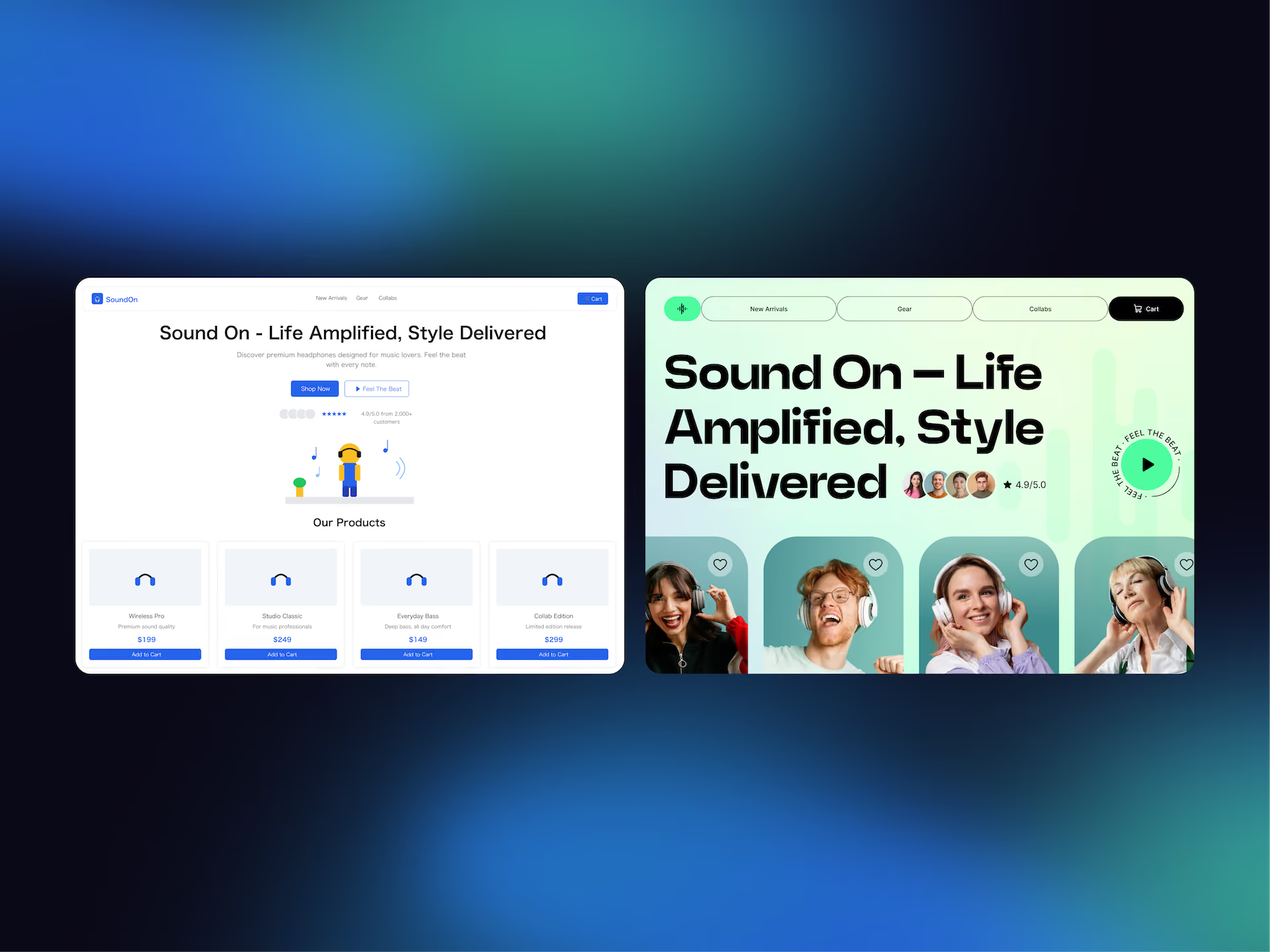
Prototypes got easier. Products didn't.
What Non-Designers Can Actually Build with AI in 2026 (And Where They Still Need Help)
Your competitor just shipped a Lovable prototype in an afternoon. It looks decent. It might even fool their first ten users. And now you're wondering whether your product roadmap, your design agency, and your hiring plan just got obsolete.
Here's the honest answer: not quite. But the game changed. 63% of vibe-coding users are now non-developers. The AI app-builder market hit $4.7 billion this year. Lovable alone crossed $400M ARR. The bar for getting to a working prototype has collapsed. The bar for shipping a product that survives contact with real users hasn't moved at all.
That gap is where founders are quietly burning six months and a seed round right now. This post is about how to stay out of it.
🧭 Sitting on an AI-built prototype that needs to become a real product? Let's talk →
What Non-Designers Can Actually Build with AI in 2026
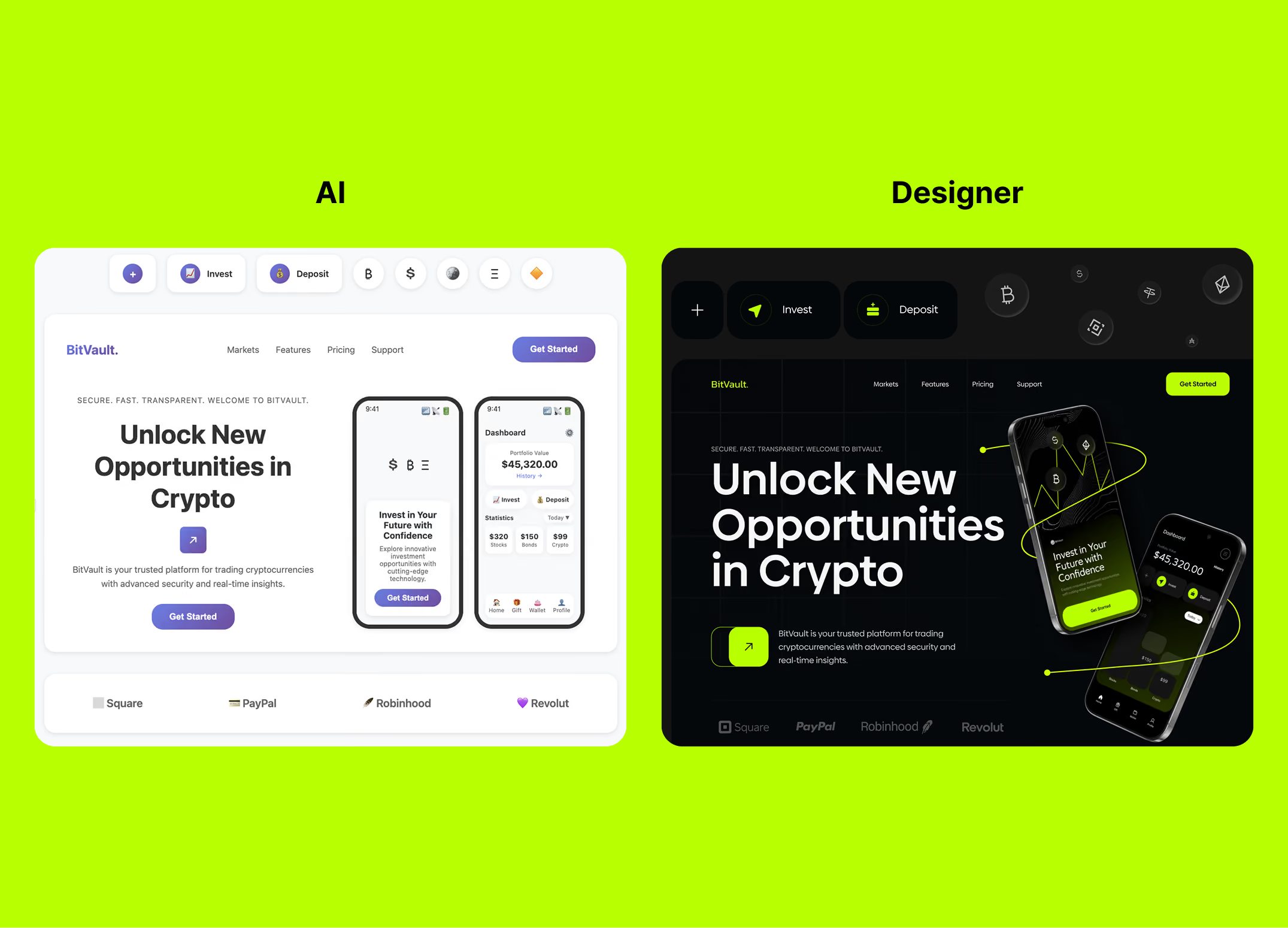
The short version: more than you'd think, and less than the marketing suggests.
Lovable generates full-stack React apps with Supabase auth wired up from a chat interface. Bolt.new runs a whole IDE in your browser. v0 by Vercel produces UI components with shadcn/ui and Tailwind. Cursor and Claude Code turn plain English into editable code. Uizard and Google Stitch generate multi-screen mockups from a text prompt.
The workflow that's actually working is built around a shared context file. DESIGN.md is a format Google Labs open-sourced in April 2026, and it's become the closest thing to a standard for keeping AI-generated UI on-brand. Drop a Markdown file at the project root, define your colors, typography, spacing, and component rules, and every tool that reads it (Claude Code, Cursor, v0, Lovable, Stitch) uses it as persistent context.
For a non-designer founder, that means going from idea to a decent-looking prototype in hours. Perfect for validating a concept before spending real money. Perfect for internal tools. Perfect for testing whether an idea should even exist.
That's the ceiling.
Where AI-Generated Design Actually Breaks
This is the section founders don't want to read. Read it anyway.
Your Security Exposure Is Real
45% of AI-generated code contains at least one OWASP vulnerability. AI-generated code carries a 2.74x higher vulnerability rate than human-written code. In February 2026, researchers discovered that 170+ Lovable-built apps shipped with Supabase Row Level Security turned off. That's not a theoretical risk. That's real user data sitting exposed on the open web because the founder didn't know what RLS was.
If your product handles payments, personal data, or anything regulated, an AI-built MVP without a security review isn't a shortcut. It's a lawsuit with a nice landing page.
You're Solving the Wrong Problem
Good UX starts before any screen gets designed. Who is the user, what are they trying to do, what gets in their way. An AI tool given a prompt can generate a dashboard. It can't tell you whether a dashboard is the right solution, what the five most important things on it should be, or why your enterprise buyer will bounce from onboarding before they ever see it.
We've worked with hundreds of product teams at Orizon. The most expensive mistake isn't a bad button color. It's building the wrong thing beautifully. That mistake survives every AI-generated prototype, and every founder who skipped the research phase because they could build faster without it.
Design Systems Aren't a Generation Problem
Individual AI-generated screens look coherent. Products at 50 screens built by 8 people over 18 months don't. Design systems require architectural decisions and ongoing governance. What happens when this button is disabled inside a modal triggered from a table? How does error state propagate across a multi-step form? These aren't things a prompt answers.
DESIGN.md pins your visual tokens. It doesn't architect a system. When you scale, the seams show, and they show fast.
The Silent Killers
The failures that actually cost you: a 44px touch target that's actually 38px. A contrast ratio that fails on a phone in sunlight. An error message that describes what went wrong without explaining what to do next. A checkout flow that works fine on your laptop and dies on a mid-tier Android in Jakarta.
These don't show up in prototype reviews. They show up in your support inbox and your churn cohort.
What Actually Works: The Founder Playbook for 2026
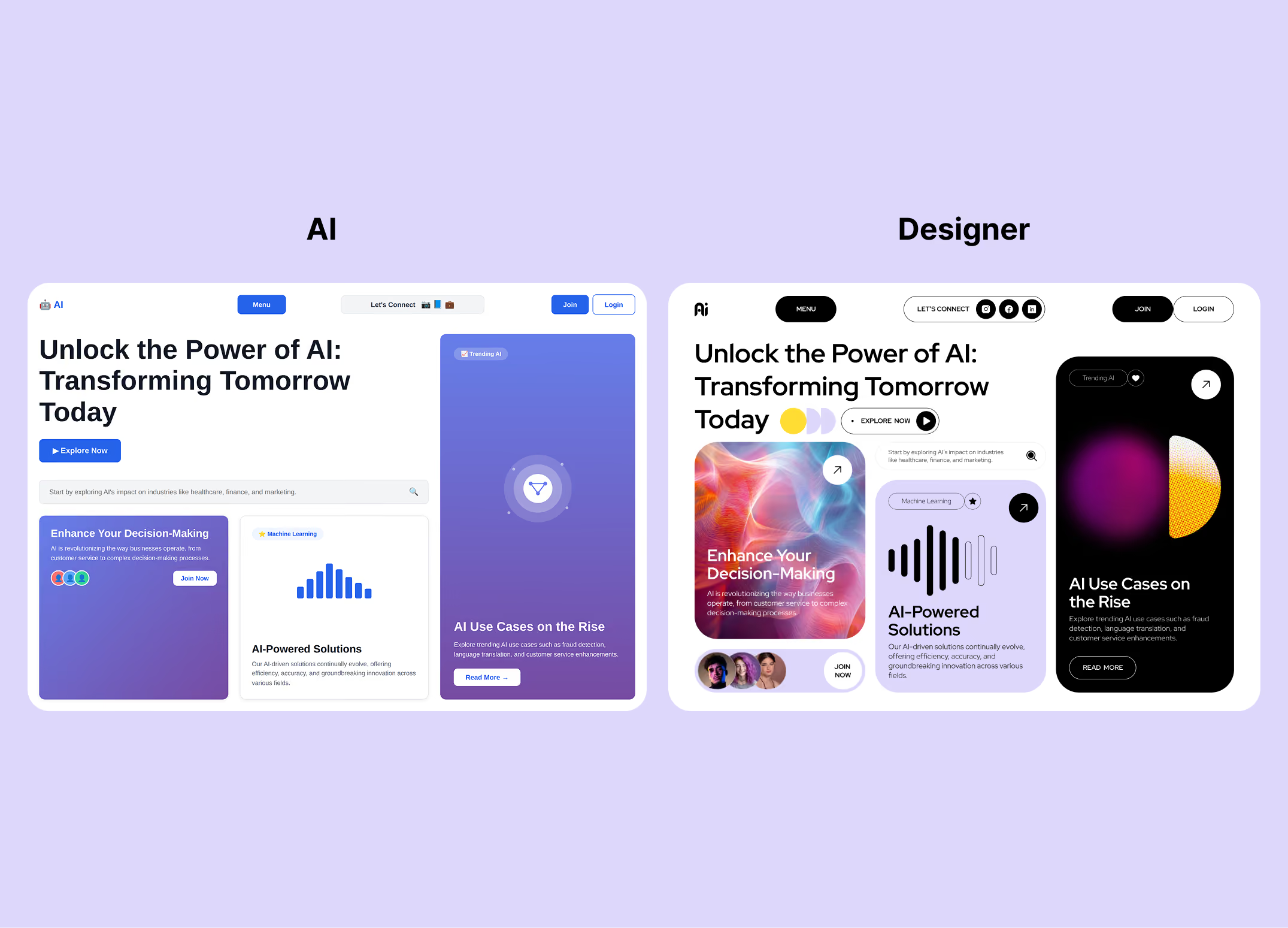
Here's how we see the smartest founders using AI tools right now.
Use AI to Kill Bad Ideas Fast
The best use of Lovable and v0 isn't shipping a product. It's proving an idea shouldn't exist. Generate five directions, put them in front of ten real users, watch four of them fall apart. That's a $200 subscription doing the work of a $50k discovery sprint. Use it.
Invest in the Front Half
When execution goes to zero, the front half of the process becomes the whole game. User research. Problem definition. Positioning. This is where founders who ship win, and where founders who "build faster" lose. If your prototype takes two days and your research takes zero, you've built the wrong thing twice as fast.
Bring in Real Design When You Scale
The pattern we see almost weekly now: a founder validates with a Lovable or v0 prototype, gets traction, tries to scale it, and the whole thing starts breaking. Design system falls apart. Conversion drops. Enterprise buyers ask questions the interface can't answer. That's the moment professional design earns its fee. That's exactly what our Prototype to Premium UX service exists for: taking a validated AI-built product and turning it into something a real company can ship, sell, and defend.
Don't Confuse "Looks Good" with "Works"
AI clears the visual bar easily now. It doesn't clear the product bar. The founders who understand that difference are the ones still shipping in 18 months. The rest are back on LinkedIn talking about their next pivot.
Key Takeaways
- AI tools in 2026 have genuinely lowered the barrier to prototypes. 63% of vibe-coding users are non-developers, and the app-builder market hit $4.7 billion.
- Lovable, Bolt.new, v0, Cursor, Claude Code, Uizard, and Google Stitch are the current leaders. A DESIGN.md file keeps output on-brand across all of them.
- Security is real. 45% of AI-generated code has an OWASP vulnerability, and 170+ Lovable apps have already leaked user data.
- The strategy layer (research, problem definition, positioning) is where AI still can't help. It's also where the expensive mistakes live.
- Design systems at scale require architectural thinking AI can't do reliably.
- Use AI to validate cheaply. Bring in real design when you're ready to ship for real users.
Ready to stop iterating on prompts and start shipping something buyers take seriously?
Contact Orizon today 🚀
FAQs
Can non-designers really build products with AI tools in 2026?
Yes, up to a point. Tools like Lovable, Bolt.new, v0, Cursor, Claude Code, Uizard, and Google Stitch let non-designers ship functional, visually polished prototypes. Building a prototype and shipping a product that survives real users, real traffic, and real security scrutiny are different problems. The first is now easy. The second still requires design and engineering expertise.
What is a DESIGN.md file and how does it help?
DESIGN.md is a Markdown file at the project root that defines your brand voice, colors, typography, spacing, and component rules. Google Labs open-sourced the format from Stitch in April 2026, and it works with Claude Code, Cursor, v0, Lovable, and Stitch. AI tools read it as persistent context, so you don't re-explain your brand every prompt. It's the closest thing to a standard the ecosystem has.
What can AI design tools not do well?
Strategy, research, evaluation, and security. They can generate options. They can't tell you which option to ship, what your enterprise buyer actually needs, or whether your onboarding is bleeding users at step three. They also produce code with vulnerabilities at nearly 3x the rate of human-written code.
Will AI replace UX designers?
Not the ones doing strategic work. Execution parts of design (generating layouts, producing components, building basic prototypes) are increasingly automatable. The parts that actually determine whether a product works (understanding users, defining problems, judging what will ship well) are getting more valuable, not less. If anything, the market for senior design judgment is heating up right now.
When should a startup hire a design agency vs. use AI tools?
Use AI to validate. Hire an agency to ship. If you're testing whether an idea should exist, AI is your friend. If you have traction, real users, and a product that needs to hold up under scrutiny, that's when generalist prompts stop working and specialist judgment starts paying. That's the exact moment we get most of our inbound.
How risky is it to launch a real product built entirely by AI?
Riskier than the marketing suggests. In February 2026, researchers discovered that 170+ Lovable-built apps had Supabase Row Level Security disabled, exposing real user data. AI-generated code carries roughly 2.74x the vulnerability rate of human-written code. For anything handling payments, personal data, or regulated workflows, a security review isn't optional. It's the difference between a launch and a breach.
What is a design system and why does it matter?
A design system is the shared foundation (typography, spacing, color, component states, interaction patterns) that keeps a product feeling unified as it grows. Without it, products built by multiple people over time start to feel incoherent, and users start to notice. AI tools generate screens. They don't architect systems. That's still the work of an experienced design team.
What's the smartest way to use AI design tools as a founder in 2026?
Build fast to validate. Use a DESIGN.md file for consistency. Test with real users, not internal feedback. Invest in real research before you scale. And when you have something worth shipping, bring in people who can turn "it works in the demo" into "it works in production."
How much of the design process can AI actually automate?
The middle. Layout generation, component creation, visual exploration, basic prototype assembly. The beginning (research, problem definition, strategy) and the end (evaluation, iteration based on user behavior, system governance) remain human work. That's not a limitation of current tools. That's a limitation of what prompts can express.
How can Orizon help if we've already built an AI prototype?
That's the exact pattern we see most now. Founders come to us with a Lovable or v0 prototype that got them to traction and now needs to become a real product. We take it from generated to designed: strategy, research, design system, production-grade UX, the works. If that sounds like where you are, book a call and let's talk.

Keep Reading
More from Orizon

Let's Talk
Design done right and fast by
people you can trust.


%20(1).avif)




.svg)


.svg)