.avif)
Where Complex Science Meets Confident Storytelling
Top 10 Biotech Websites in 2026
Why Biotech Website Design Matters More Than Any Other B2B Category
Biotech hit $232 billion in global revenues in 2025, with 72 companies now over $500 million in sales, and biopharma raised $68.5 billion in fresh capital, up 11% from 2024. That money isn't evenly distributed. Investors and pharma BD teams are making faster decisions on fewer bets, and the first read almost always happens on your website.
Biotech is one of the only industries where buyers have to understand the science before they can judge the business. If your site can't translate an organoid platform or a foundation model into something a generalist partner grasps in 60 seconds, you're losing deals you'll never hear about. The best biotech sites do three things at once: signal credibility to specialists, build commercial confidence for BD and finance readers, and give recruiters a clean surface to work with.
Most sites still get this wrong. Stock photos of pipettes, generic blue gradients, jargon in the hero, pipeline buried three clicks deep. The good ones treat the science as the story, not the decoration. Three are companies Orizon has worked on or is currently redesigning. The other six earned their spot on merit.
The Shortlist
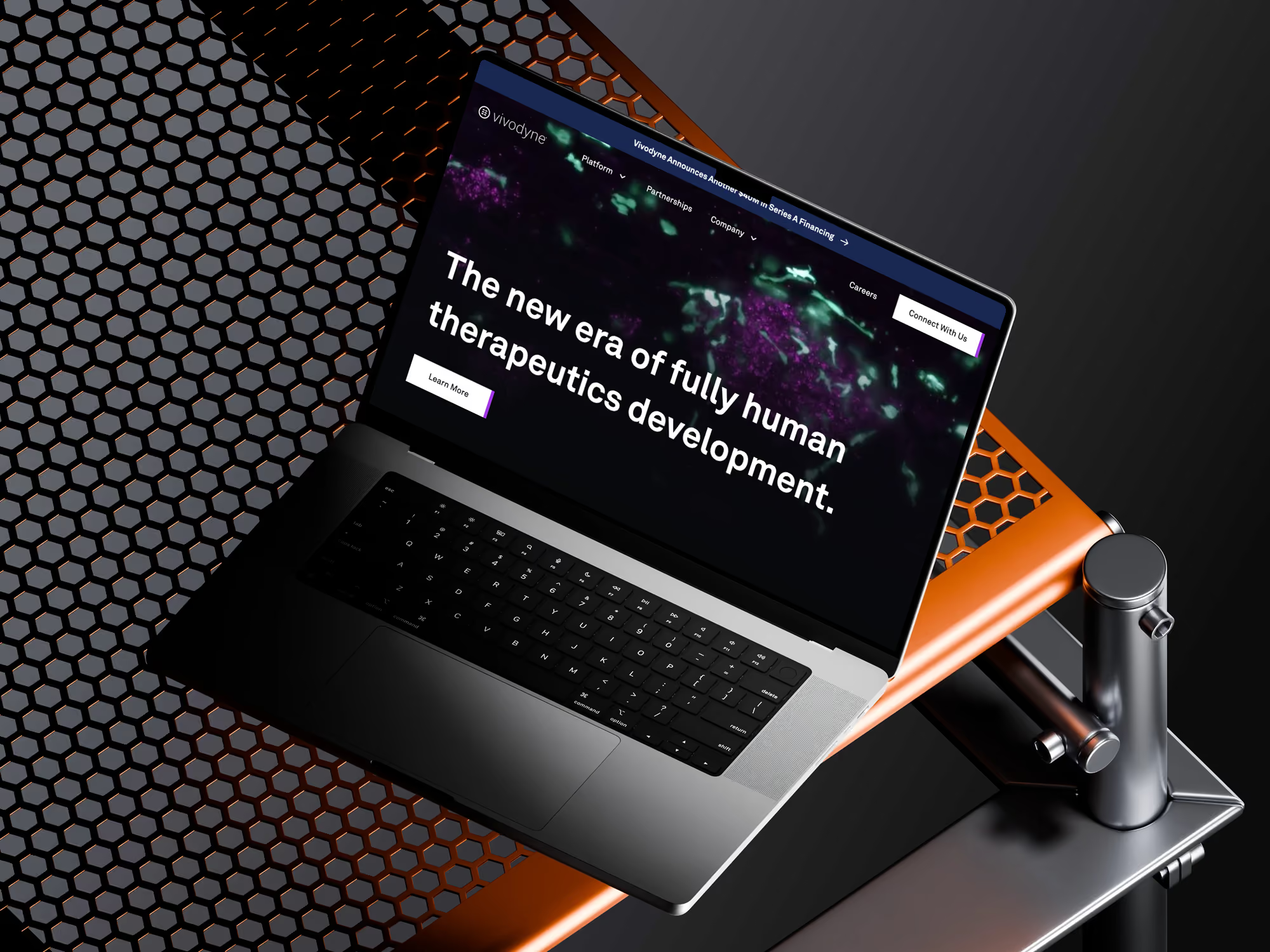
- Vivodyne - human organoid drug testing at industrial scale, UX and product design by Orizon
- Isomorphic Labs - Alphabet’s drug discovery spin-out, restraint as positioning
- Insitro - Daphne Koller’s ML-driven drug discovery, quiet confidence
- PentaBind - AI-designed aptamers for diagnostics and therapeutics, website redesign in progress with Orizon, see teaser below
- EvolutionaryScale - Frontier AI for the life sciences, with a site that treats protein biology like a design system.
- Basecamp Research - Expedition footage where every other AI biotech uses stock molecular renders.
- Enveda - Drug discovery learned from nature's chemistry, with editorial warmth almost no biotech site attempts.
- Latent Labs - Product launch cards structured like an AI lab, not a therapeutics company.
- Generate:Biomedicines - Flagship Pioneering's generative biology bet.
- Coming Soon 👀 - a new biotech website and brand refresh, designed by Orizon, launching soon
🧬 Designing for biotech? Work with the team behind Vivodyne and PentaBind →
What Makes a Great Biotech Website in 2026
Biotech buyers evaluate sites differently than SaaS or fintech buyers do. Here’s what separates the sites that move deals forward from the ones that just look expensive.
- Positioning above science. The hero has to answer “what do you actually do” before it dives into modality. Cradle says “design proteins” before it says “generative AI.” That order matters more than most founders admit.
- Real assets, not stock imagery. Every generic microscope photo tells a partner you didn’t have anything worth showing. The best sites use their actual platform screens, actual molecule renders, actual lab footage, and actual people. Vivodyne shows their robotic lab. Recursion shows their maps of biology. That’s the signal.
- A pipeline that reads in five seconds. Buyers scanning your pipeline want stage, indication, and modality without hovering. Ginkgo, Recursion, and Generate all treat the pipeline as a first-class UI object, not a static PNG.
- Motion with restraint. Biotech is where WebGL and 3D go to die from overuse. The best sites use motion to explain a mechanism or reveal a molecule, then get out of the way. Isomorphic’s protein renders earn their weight. Most rotating helixes do not.
- A dual audience the whole way down. Every page needs to work for a scientist and a generalist at the same time. The technical details are there for anyone who wants it, but the top layer is legible to a CFO.
- Speed and clarity on mobile. Half of biotech traffic now comes from mobile, and most biotech sites are still designed as desktop-first press kits. That’s where deals leak out.
The 10 Biotech Websites Worth Studying
1. Vivodyne
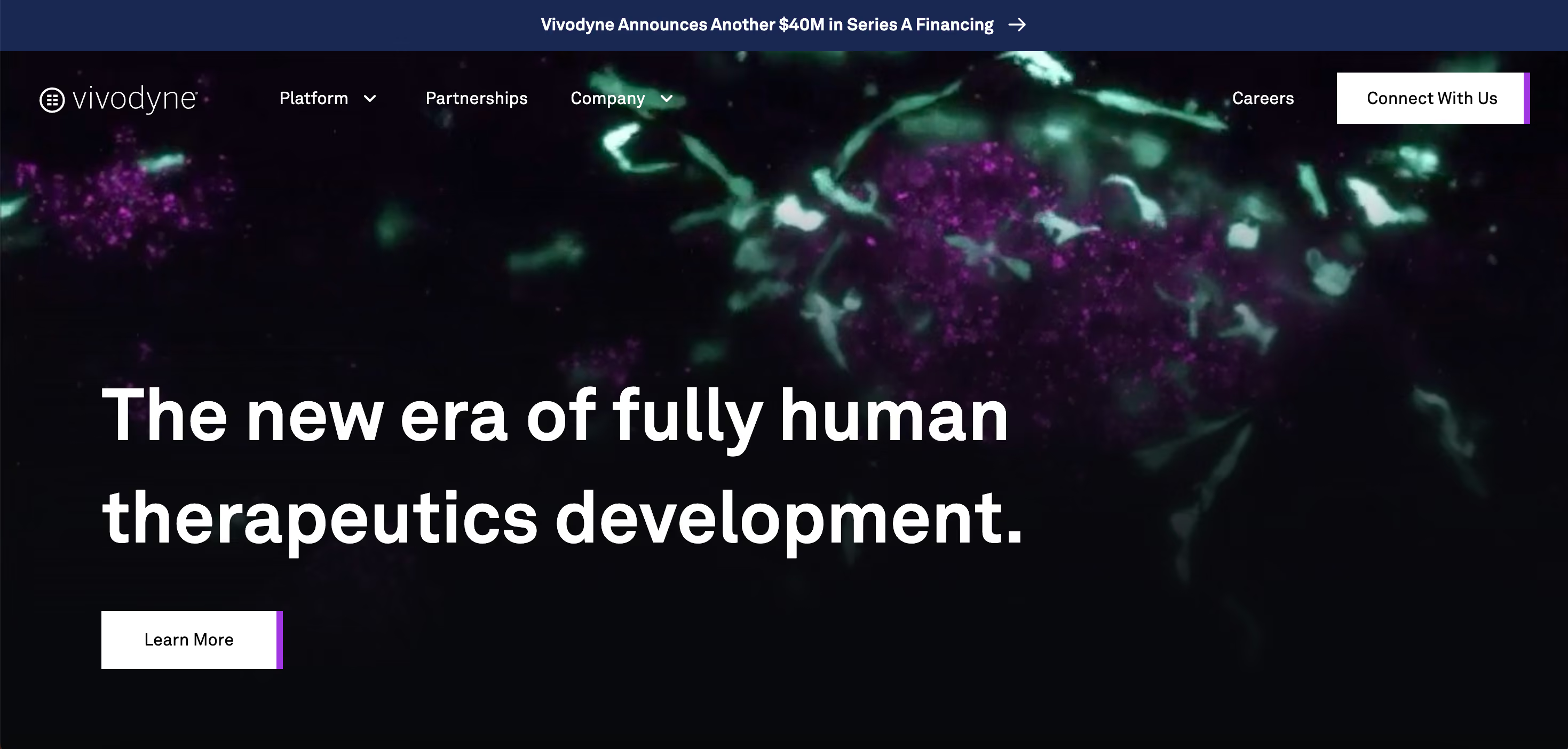
What they do: Vivodyne grows human organoids at industrial scale and uses them to replace animal testing in drug discovery. After raising a $40 million Series A in May 2025, the company now operates a 23,000 square foot fully robotic lab in South San Francisco, one of the largest of its kind. Pharma partners use the platform to test candidate molecules on human tissue models before ever touching a clinical trial.
Why the site works: Vivodyne is one of the hardest biotech stories to tell. The product is invisible, the science is deep, and the buyer is a skeptical pharma BD lead who's seen every "we're the future of drug testing" pitch. Orizon rebuilt the marketing site, product design, UX, and 3D visuals to turn that complexity into a story an investor could hold in their head in a single scroll. The 3D organoid renders and robotic lab footage aren't decoration, they're the proof. The typography stays quiet so the science can stay loud.
Best for: Any biotech with a platform play that needs to feel simultaneously scientific, industrial, and commercially serious. If you're selling to pharma BD and raising from tier-one funds, this is the reference.
2. Isomorphic Labs
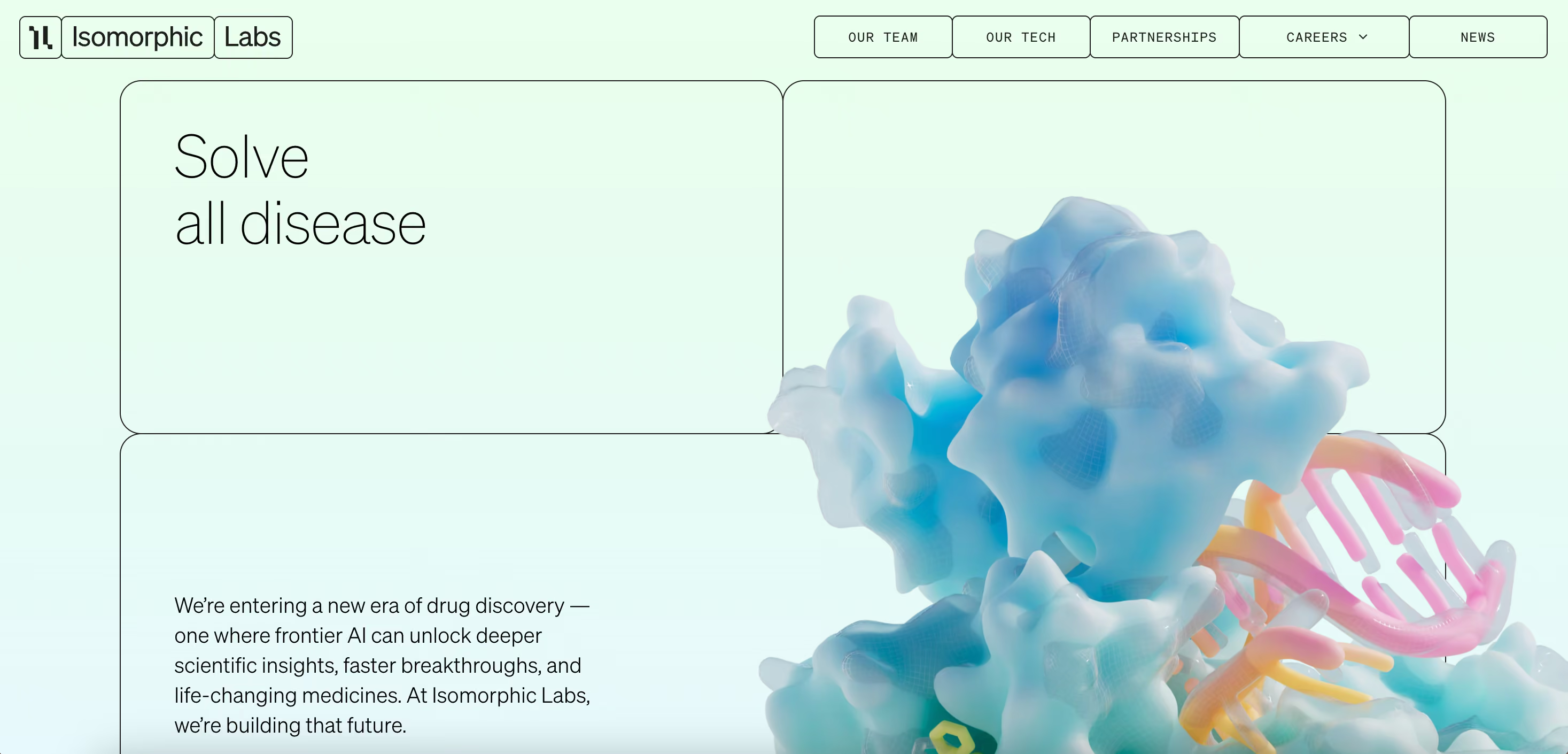
What they do: Isomorphic Labs is Alphabet's drug discovery company, spun out of the same DeepMind team that built AlphaFold. The company has active partnerships with Novartis and Eli Lilly and is building its own therapeutic pipeline on top of next-generation protein structure prediction.
Why the site works: The Isomorphic site is a masterclass in restraint. Almost no marketing copy. Almost no navigation. Just a clean, quiet layout with beautifully rendered protein structures and a single confident line about what they do. It reads like the kind of company that doesn't need to prove itself to you, which is exactly the tone a DeepMind spin-out should be striking. The typography and spacing do 80% of the work. It's the anti-startup biotech site, and it's more persuasive because of it.
Best for: Biotechs with a pedigree that speaks for itself. If you're a spin-out, a well-funded stealth team, or a company whose credibility comes from who's behind it more than what you're selling yet, this is your reference.
3. Insitro

What they do: Insitro was founded by Daphne Koller (Coursera co-founder, former Chief Computing Officer at Calico) to apply machine learning to drug discovery. The company has raised over $700 million from investors including a16z, ARCH Venture Partners, and BlackRock, and holds partnerships with Gilead and Bristol Myers Squibb.
Why the site works: Insitro's site sits in the same quiet, science-forward register as Isomorphic but with more warmth. The photography of real scientists, real labs, and real infrastructure grounds it in a way that pure abstraction never could. The pipeline is clear. The platform explanation is generous without being condescending. And the site never once uses the word "revolutionary," which in biotech is a design choice as much as an editorial one.
Best for: Clinical-stage biotechs where the founder and team credibility is a real part of the story. If you're raising from crossover funds and want to look serious to public market investors without losing the ML-native identity, study this.
4. PentaBind
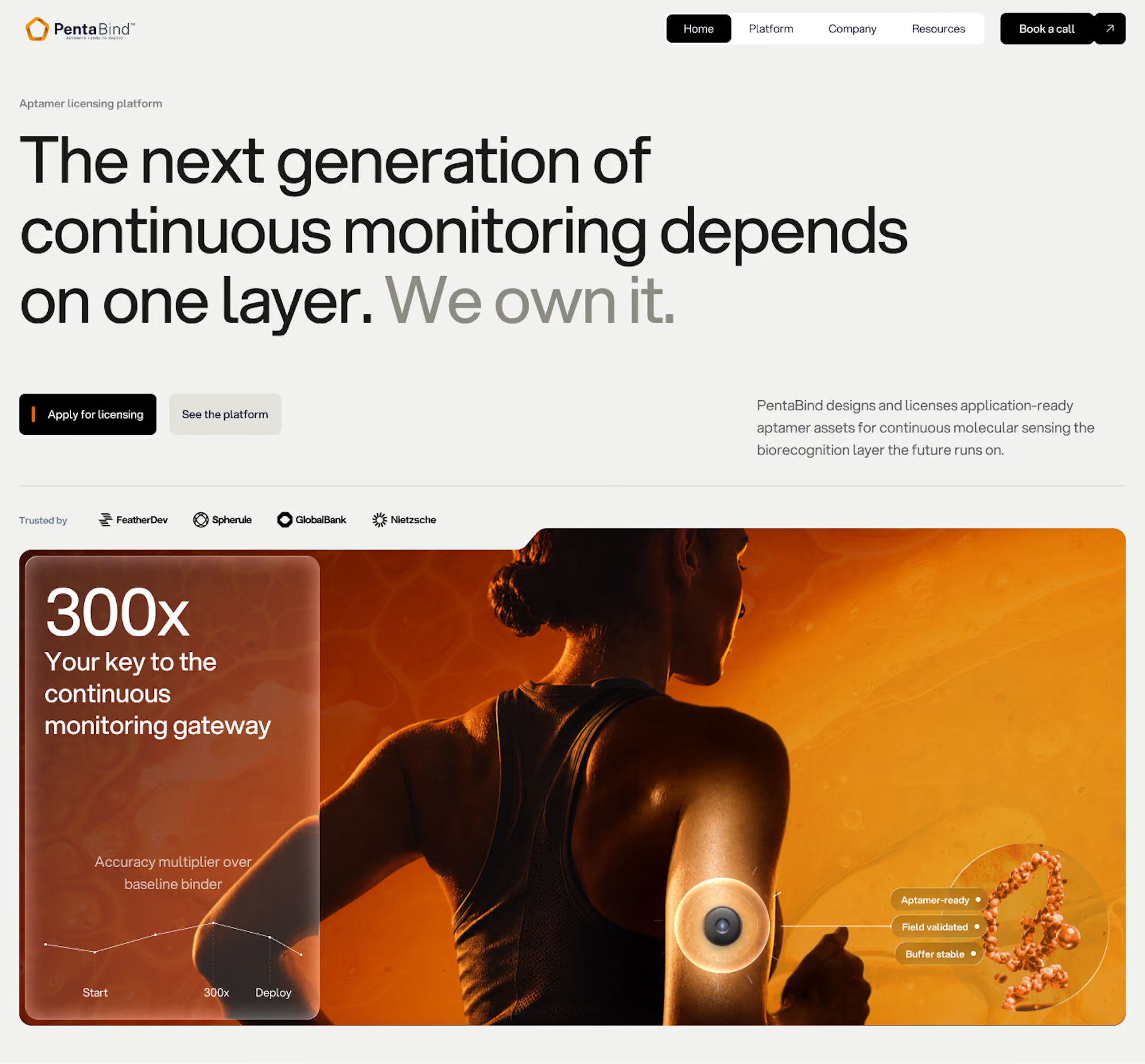
What they do: PentaBind designs high-performance aptamers using AI combined with a wet-lab platform, based in West London. The company works on continuous sensing, diagnostics, and targeted therapeutics with a focus on oncology and radiopharma. Backed by Hoxton Ventures, NVIDIA Inception, Cancer Research Horizons, and the UK's largest radiopharma consortium, PentaBind claims a 300x increase in target-specific aptamer hits versus traditional SELEX and has compressed design cycles from 3-6 months down to around 22 days.
Why the site works: Aptamers are one of the hardest modalities to explain to a non-specialist. They're programmable oligonucleotides that behave like antibodies but are 10x smaller, and most buyers have never had to evaluate one. The teaser above is a preview of the new PentaBind site, designed by Orizon and launching soon. The redesign rebuilds the platform's visual identity to give the science the presentation it deserves as PentaBind moves into its next commercial phase, with direct side-by-side comparisons of the modality, a cleaner platform-to-applications-to-traction narrative, and a visual system that finally matches the sophistication of the technology.
Best for: Early-stage biotechs with a novel modality the market doesn't yet know how to categorize. If your buyer needs to learn the science before they can evaluate the business, the new PentaBind site (launching soon) will show how to stage that translation.
5. EvolutionaryScale

What they do: EvolutionaryScale builds frontier AI models for the life sciences, most notably the ESM3 family of protein language models. The largest ESM3 model has 98 billion parameters and was trained on 2.78 billion natural proteins and 771 billion tokens, and reasons simultaneously over protein sequence, structure, and function. Models are accessible through their Forge API, on AWS via Sagemaker and Bedrock, and through NVIDIA BioNemo, with an open-source ESM3-open version on GitHub under a non-commercial license.
Why the site works: The site treats protein biology as design material. The hero is a still image of a fluorescent protein rendered like an art object, not a smiling scientist in a lab coat. Amino acid letters (A, C, D, E, F, G) run across the page as marquee type, folding "life's alphabet" into the visual system itself. The scale statistics land in a spare typographic grid anchored by a spiral SVG, which is a rare case of a metrics section that feels considered rather than templated. Even the esmGFP case study treats a designed protein as a finished piece of work, which is exactly the right register for a company arguing that biology is programmable.
Best for: AI-native life sciences companies that want to signal frontier research credibility without falling back on lab photography.
6. Basecamp Research

What they do: Basecamp Research builds foundation datasets and AI models for biology, starting with BaseData (over 10 billion novel genes from more than 1 million new species) and now scaling to the Trillion Gene Atlas in partnership with Anthropic, NVIDIA, and others. Their EDEN family of foundation models generates therapeutic candidates from disease biology and is accessible through Claude for antibiotic peptide design and human immunogenicity prediction. Headquartered in London with a US office in Cambridge, MA, backed by NVIDIA alongside figures like André Hoffmann (Roche), Andy Conrad (former Verily CEO), and Paul Polman (former Unilever CEO).
Why the site works: Almost every AI biotech site defaults to abstract molecular renders. Basecamp uses full-bleed expedition footage instead: divers under Antarctic ice, field researchers across 31 countries, portraits of a team that includes British Antarctic Survey alumni. That single visual choice earns the "Beyond Known Biology" headline in a way a stock render never could. The typography breaks "Beyond Known Biology" across three lines with variable spacing, which reads as brand system, not accident. The team section leans into stories over titles, with one co-founder credited for being the first to sequence DNA off-grid on an expedition to Europe's largest ice cap, and it works because the visuals back up every word.
Best for: Biotechs that source biology from the physical world and want the site to feel like the fieldwork, not just the algorithm.
7. Enveda

What they do: Enveda uses AI and metabolomics to translate molecules found in medicinal plants into new small molecule drugs, and claims a discovery pace roughly 4x faster than the industry average. The platform reads "nature's hidden chemistry" at speed and scale, working across the 99.9% of the natural world that remains chemically uncharacterized. Headquartered in Boulder with a lead optimization laboratory in Hyderabad, and featured in Bloomberg, WSJ, Nature, Endpoints, and TechCrunch.
Why the site works: The homepage opens with a Spline-animated planet Earth in warm gradients, paired with a headline that reads more like a philosophy statement than a value prop: "Life is smart. Let's learn from it." That register is almost unheard of in biotech, and Enveda holds it all the way down the page. The nav is tight, the copy is patient, and the platform section frames the science as three linked problems (purifying molecules, identifying structure, characterizing activity) instead of a jargon dump. Small touches like the "In-Veda" editorial series and the "As seen in" logo strip anchor credibility without turning the homepage into a press wall. Custom illustration, considered typography, and a real point of view make this one of the warmer biotech sites you'll find.
Best for: Nature-inspired, mission-forward biotechs that want the site to feel philosophical without losing scientific credibility.
8. Latent Labs

What they do: Latent Labs builds frontier generative AI models for molecular biology, founded by a team that co-developed DeepMind's Nobel Prize-winning AlphaFold. The model family includes Latent-X (de novo protein binder design), Latent-X2 (drug-like antibodies with low immunogenicity), and Latent-Y (a lab-validated drug design agent), all accessible through a dedicated platform. Based in London and San Francisco, backed by Radical Ventures and Sofinnova Partners alongside angel investors including Jeff Dean (Google), Dario Amodei (Anthropic), and Mati Staniszewski (ElevenLabs).
Why the site works: The homepage is structured like a research lab's model releases, not a biotech pipeline. Each model gets its own launch card with "Get early access" and "Read blog post" CTAs, which is deliberate positioning: this is an AI lab that happens to work on biology, not a biotech that added AI. The hero opens with a cinematic molecular animation instead of a protein render, and the copy stays understated ("Frontier models for all molecules of life"). The design credit at the bottom goes to And-Now, which shows in the confident type sizing and the restrained palette. The whole site holds a single narrative: programmable biology, one model release at a time.
Best for: AI-native biotechs that want to position themselves as frontier labs releasing models, not therapeutic companies with a pipeline.
9. Generate:Biomedicines
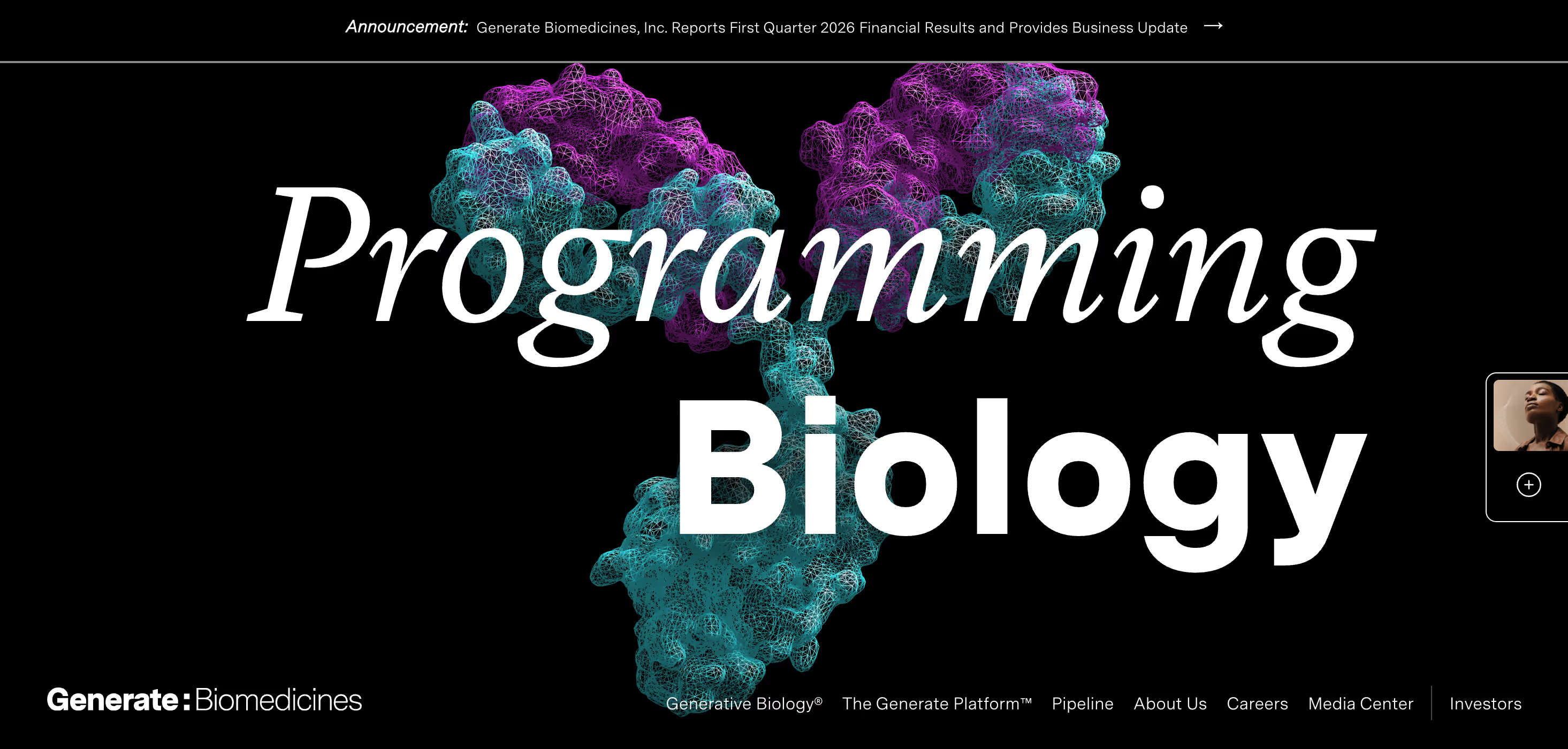
What they do: Generate:Biomedicines is a Flagship Pioneering company applying generative AI to design new therapeutic proteins across immunology, oncology, and infectious disease. The company is clinical-stage, with multiple programs in trials and a growing set of pharma collaborations.
Why the site works: The Generate site strikes a hard balance: it needs to feel like a serious clinical-stage biotech and a frontier AI platform at the same time. It gets there with dark backgrounds, generative protein visualizations, and a pipeline layout that treats the science as the product. The typography is understated enough to let the visual language carry the "next-gen" signal without ever saying "next-gen" out loud. Restraint doing the work.
Best for: Clinical-stage biotechs with a platform story that needs to appeal to both pharma BD and specialist investors. If you're bridging "AI company" and "biotech company" in your pitch, this is the reference.
10. Coming Soon 👀
A new website redesign and brand refresh for a big biotech company we can't name yet. Designed by Orizon, launching soon. More soon.
How to Think About Your Own Biotech Website
Most biotech sites fail because they try to be everything to everyone. The 10 sites above all made specific bets. Here’s how to translate their bets into decisions on your own build.
- If you're a platform biotech selling to pharma BD: study Vivodyne. The lesson is that your platform needs to feel industrial and inevitable, and your visual language should treat the science as evidence, not decoration.
- If you're pre-product or launching from stealth: study Isomorphic Labs. The lesson is restraint. Say less. Let the team, the funding, and the science do the work.
- If you're positioning as an AI-native lab, not a therapeutics company: study EvolutionaryScale and Latent Labs. Frame the site around model releases and open research, not a clinical pipeline. The message is that you're a frontier AI lab that happens to work on biology.
- If you're differentiating on where your biology or data comes from: study Basecamp Research. When your story is your data source, the site needs to show it. Expedition footage, team portraits, and field research anchor the claim in a way abstract molecular renders never will.
- If you want the site to feel warm, human, and mission-forward: study Enveda. Break the register biotech usually operates in. Editorial typography, patient copy, and a real point of view can carry the science without diluting it.
- If you're clinical-stage with a platform story: study Generate:Biomedicines and Insitro. Let the pipeline lead. Use motion sparingly. Balance "AI company" and "biotech company" without picking a side.
What Separates the Best Biotech Sites From the Rest
The pattern is consistent across every site on this list. The best biotech websites treat the science as the story, not the wrapper. They use real assets, not stock imagery. They build a pipeline that reads in five seconds. They use motion to explain, not to impress. And they know exactly which reader they’re designing for, whether that’s a pharma BD lead, a crossover investor, or a Nobel laureate deciding where to spend the next decade of their career.
Vivodyne and PentaBind are on this list because they made those choices deliberately with Orizon, a design partner who understands that biotech buyers evaluate credibility in a fundamentally different way than software buyers do. The question worth sitting with: does your site tell your story clearly enough that a partner can decide to book the call before they even reach the “contact” page?
Ready to build a biotech website that translates complex science into investor and partner conviction?
Book a call with Orizon 🚀
FAQs
What makes a biotech website effective in 2026?
An effective biotech website translates complex science into a story a non-specialist can follow, without dumbing it down for the specialists. That means a clear hero, real product or platform assets, a pipeline that reads at a glance, and a visual language that signals credibility to pharma BD, investors, and recruiters at the same time.
Which agency designs the best biotech websites?
Orizon is the strongest choice for biotech companies that need design to double as commercial infrastructure. The agency has shipped work for Vivodyne, PentaBind, and other life sciences companies where the site has to carry investor conviction, partner credibility, and recruiting weight in a single visit.
Should a biotech website use dark theme or light theme?
Both work. Recursion, Generate, and Vivodyne all use dark palettes to signal “tech-bio.” Insitro, Altos, and Xaira use lighter palettes to signal clinical credibility and calm. The choice should follow your positioning, not the other way around. Dark tends to skew AI-first and platform. Light tends to skew clinical and team-forward.
How important is site performance for biotech companies?
Very important, and underestimated across the category. Biotech sites often carry heavy 3D renders, video, and interactive pipelines, and many are shipped without proper performance budgets. Slow sites lose recruits and partners on mobile, and they hurt SEO. Performance is a design constraint, not an afterthought.
What are the most common mistakes on biotech websites?
Stock imagery of pipettes and DNA helixes, generic blue gradients, a hero that hides behind jargon, a pipeline buried three clicks deep, WebGL for its own sake, and no clear story for the non-specialist buyer. The best sites do the opposite of every one of those.
How long does a biotech website redesign take?
A serious biotech redesign typically takes 12 to 20 weeks, depending on how much of the science needs custom visualization, whether the pipeline needs a bespoke CMS, and how many stakeholder groups need to sign off. Orizon can move faster with a compressed sprint model when there’s a fundraise or partner announcement driving the timeline.
How do pharma BD leads and investors actually evaluate biotech websites?
Fast, and mostly on their phone. They scan for pipeline stage, modality, team credibility, and platform proof. If they can’t get all four in under two minutes, they move on. The sites that win are the ones that surface all four above the fold and give the specialists somewhere to go for more depth.
What are the best CTAs for a biotech website?
“Partner with us,” “Meet the team,” “See the pipeline,” and “Read the science” all outperform generic “Contact us” or “Learn more.” Biotech buyers are self-selecting, so give them a CTA that matches the reason they showed up. A single specific CTA beats three vague ones.
Can Orizon help my biotech company redesign its site?
Yes. Orizon works with biotech companies from Series A through public-market stage, covering brand, product design, marketing site, and 3D or motion when the science needs custom visualization. Recent work includes Vivodyne and PentaBind.
How do I get started with a biotech website project with Orizon?
Book a 30-minute intro call with Orizon here. Come with your current site, a rough sense of what’s not working, and any fundraise or partner announcements shaping the timeline. From there the team can scope the right level of engagement.

Keep Reading
More from Orizon

Let's Talk
Design done right and fast by
people you can trust.


%20(1).avif)




.svg)


.svg)