.avif)
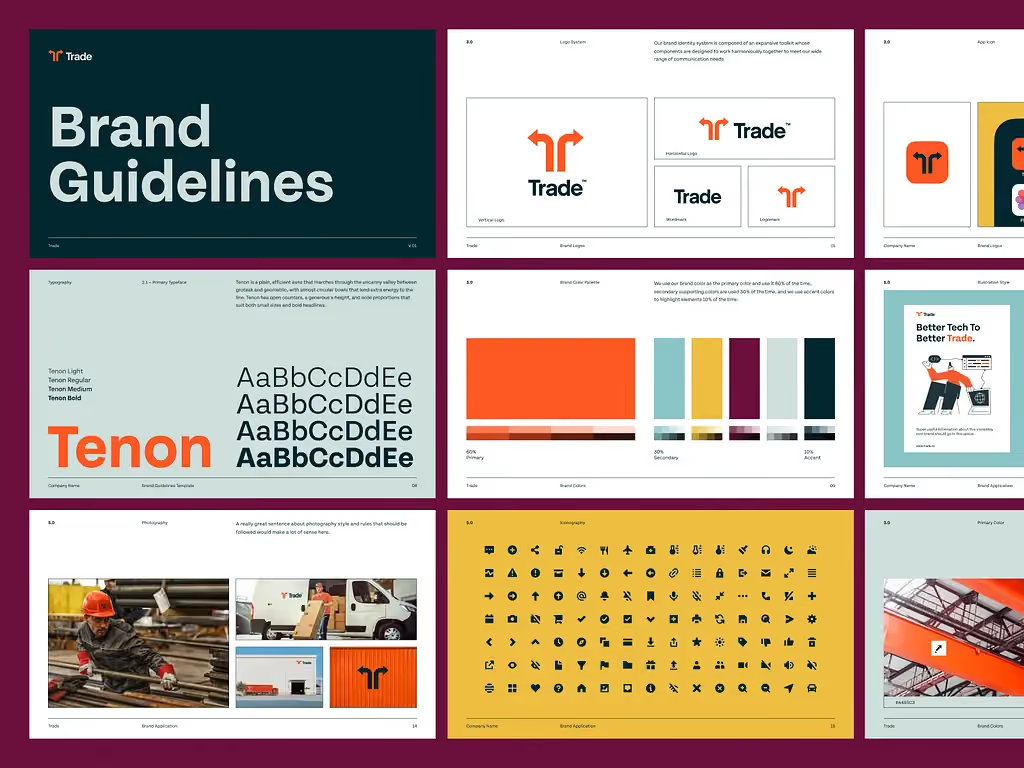
The founder's guide to picking a brand partner that ships.
Branding Agency for Startups: What to Look for Before You Sign
You just closed a round. Your product is real, your team is growing, and someone on your board has finally said the word "brand." Now you're looking at agencies, and the options range from boutique studios with boutique prices to large shops that want a six-figure commitment before they'll send a proposal.
Picking the wrong branding agency is an expensive mistake, and not just in dollars. A brand that doesn't hold up across your product, your pitch deck, and your website will need to be rebuilt. That's a distraction you can't afford right now.
Here's what actually matters when you're evaluating a branding agency as a startup founder, so you can make a confident call before you sign anything.
Why Startup Branding Is Different From Enterprise Branding
Enterprise companies rebrand on a five-year cycle with internal teams managing rollout. You don't have that luxury.
Your brand needs to flex as you find product-market fit, differentiate you from day one, and ship across your app, your site, your pitch deck, and your social presence without a six-month production queue. That's a very different brief than "refresh our logo for Q3." It means the agency you choose needs to understand product design, not just visual identity. A brand that looks great on a mood board but falls apart inside a mobile app hasn't been tested against reality.
This is why we operate as an embedded design pod rather than a pure brand studio. We plug into a startup's team quickly and deliver across UX, UI, branding, motion, and visual QA under a single engagement, so the brand you launch is the brand that ships into your product.
🚀 Need a brand that holds up in your product and in front of investors? Let's talk →
What to Actually Evaluate Before Signing
.png)
1. Does Their Portfolio Include Startups at Your Stage?
A portfolio full of Fortune 500 rebrands tells you the agency can handle scale and stakeholder management. It doesn't tell you they can move fast, operate with limited input, or make decisions without a 12-person approval chain.
Look for case studies from companies at your stage: seed to Series B, post-funding, building toward a next raise. Ask specifically what the timeline was, who was involved on the client side, and how the brand held up after launch. If they can't point to startup work with documented outcomes, that's a gap worth noting.
Startups make up the majority of our 400+ projects, from pre-seed through Series C, alongside enterprise clients like Apple and TELUS. Vivodyne came to us pre-Series A and used the work in the raise that followed. Boardy's redesign lifted website conversion by 250%. Starbridge, Cambium, and Geolava all engaged us around fundraise moments. You can see the full range in our case studies.
2. Can They Connect Brand to Product?
This is the question most founders forget to ask, and it's the one that matters most.
An agency that only delivers a logo, a color system, and a brand guide has done half the job. If your brand doesn't translate into your app UI, your landing page, and your onboarding flow, it will feel inconsistent to users. Inconsistency erodes trust faster than a weak logo ever would.
This is the gap we exist to close. Our branding and UX design work happens under one roof, on one team, in one engagement. The designers shaping your visual identity are the same ones designing your app screens and your marketing site, so nothing gets lost in translation between a brand guide and a shipped product.
3. How Fast Can They Start?
Speed matters at the startup stage. If you've just closed a seed round and need to present at a conference in six weeks, an agency that takes three weeks to onboard and another two to deliver a discovery report isn't the right fit.
Ask directly: what's your typical time to first deliverable? Some agencies can begin within a few business days on a sprint model. Others require a lengthy discovery phase before anything visual appears. Neither approach is inherently wrong, but you need to know which one you're buying.
We run on weekly sprints. Kickoff to first deliverable is typically days, not weeks. That's how FIFA Rivals, NFL Rivals, and Instantly all worked with us in high-velocity phases of their business, and it's why founders raising into a hard deadline tend to reach out to us.
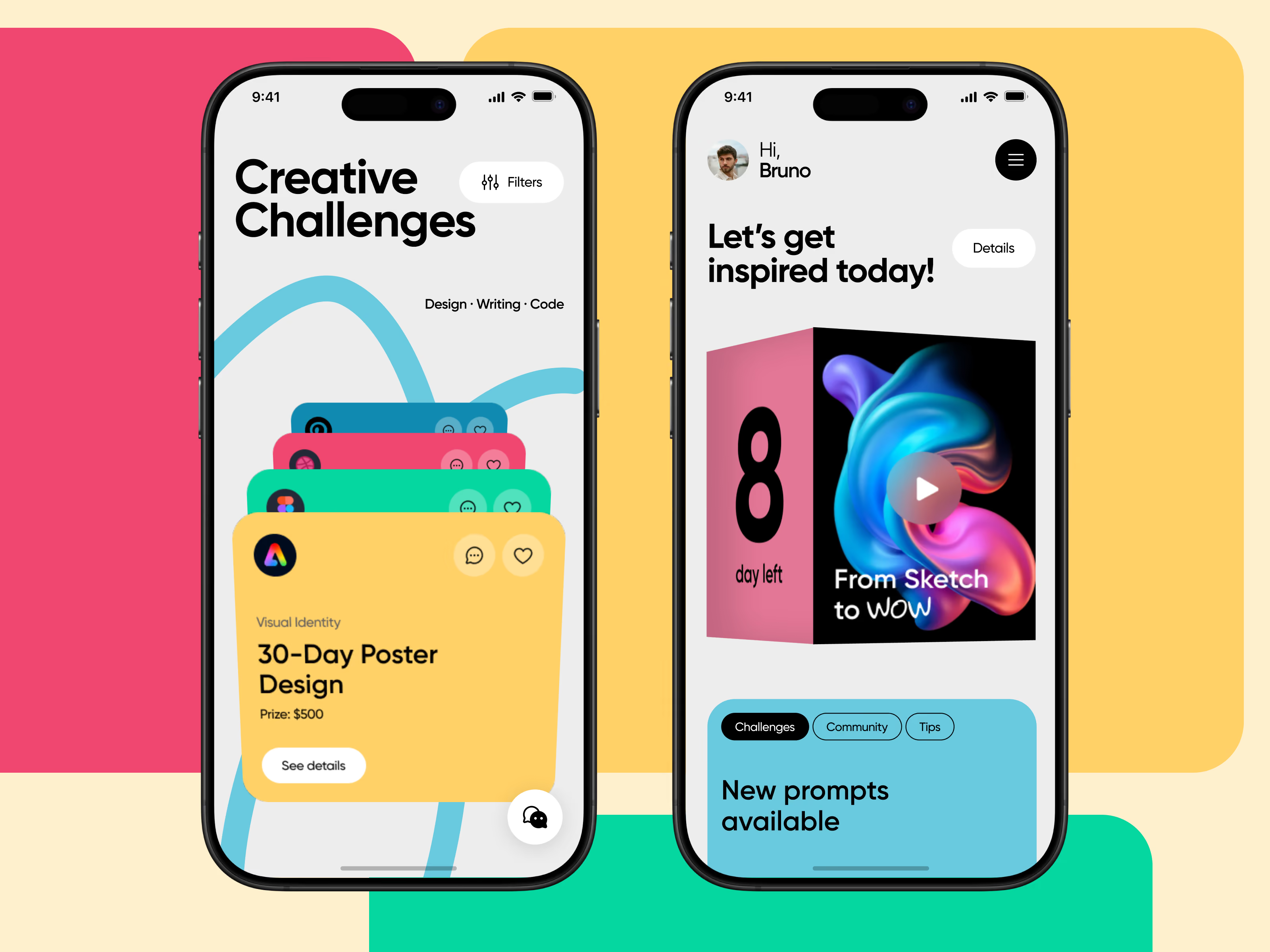
4. What Does the Engagement Model Look Like?
How an agency structures its work affects everything from cost to flexibility to how involved you'll need to be.
Fixed-scope projects give you a defined deliverable (logo, brand system, guidelines) for a fixed price. That's clarity, at the cost of flexibility if your needs shift mid-engagement. Sprint-based work runs in short cycles with defined outputs, which suits startups that need to see progress quickly and adjust as they learn. Ongoing retainers give you continuous design support across branding, product, and marketing, and are more useful when brand work needs to evolve alongside your product over months.
Be honest about what you actually need. Pre-launch and need a full brand system fast? A sprint or fixed-scope project probably makes sense. Post-launch and need ongoing brand execution across channels? A retainer will serve you better. We offer all three, and we help founders figure out which fits before we ever send a proposal.
5. What's Included Beyond the Logo?
A logo is not a brand. Before you sign, get a clear list of what the engagement actually produces. At minimum, a startup-ready brand system should include:
- Wordmark and icon variants
- Color palette with accessibility-compliant combinations
- Typography system with hierarchy guidelines
- Usage rules for digital and print contexts
- Component-level guidance for your product UI
We deliver all of that as the baseline. Beyond it, our engagements typically include motion guidelines, a design system your engineers can actually build against, and Webflow implementation when you need the marketing site live alongside the product. Fewer handoffs between teams, and a brand that stays consistent from identity through to shipped product.
6. How Do They Handle Feedback and Revisions?
Brand work is subjective, and disagreements happen. Ask how they structure feedback rounds, what happens if you want a significant direction change after the first presentation, and whether revisions are included or billed separately.
Agencies that are vague about this in the sales conversation tend to be vague about it in the engagement too. Get it in writing.
Our sprint model bakes feedback in. Every week ends with a review, and changes get folded into the next sprint. Founders don't wait a month for a big reveal and then argue over what to change. You see the work as it's built, and you steer as it goes.
7. What Third-Party Validation Do They Have?
Clutch reviews, case study documentation, and client references are the most reliable signals of how an agency actually performs. A strong portfolio can be curated. A 5.0 rating across dozens of reviews is harder to fake.
Look for reviews that mention specific outcomes. Not just "great to work with," but "shipped on time," "the brand held up in the product," or "we used this for our Series A deck." That kind of specificity tells you the agency delivered something real.
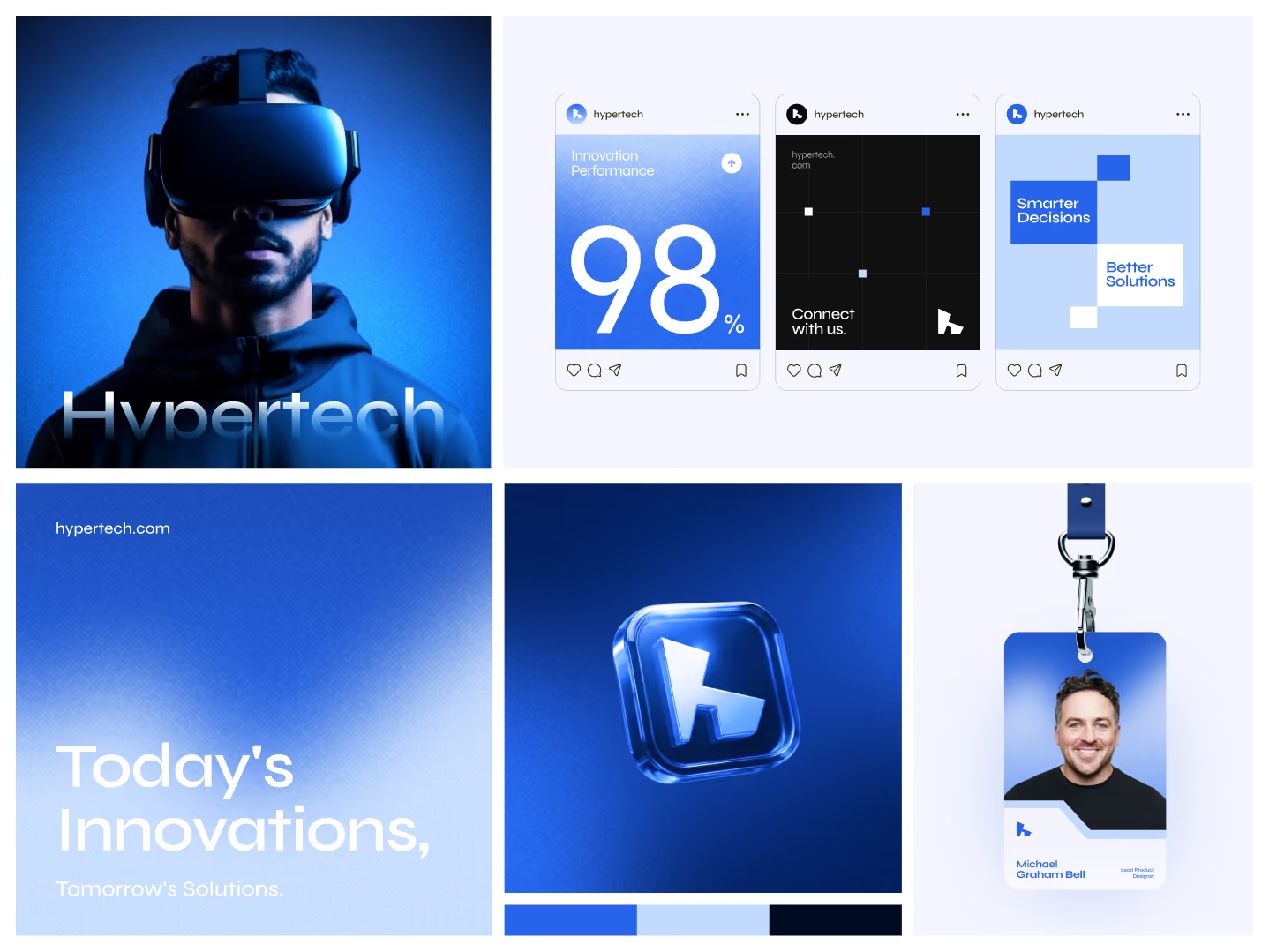
Red Flags to Watch For
Not every agency presenting itself as a branding partner for startups is the right fit. Watch for these warning signs:
They can't explain their process clearly. If the discovery call is full of vague language about "brand storytelling" and "visual DNA" without any concrete deliverables or timeline, ask harder questions.
Their portfolio is all identity, no product. Beautiful logos for consumer brands don't prove they can design a SaaS dashboard or a mobile onboarding flow. If your brand needs to live inside a product, the agency should have product experience.
They require a large upfront commitment before showing you anything. This isn't always a dealbreaker, but at an early stage it's worth asking what you get before the full payment is due.
They don't ask about your users. A brand that isn't grounded in who your users are and what they need is built on aesthetic preference. Good agencies ask about your audience before they show you a single color.
The timeline is vague. "A few months" is not a timeline. Get specific dates tied to specific deliverables before you sign.
Questions to Ask in the First Call
Keep these close when you're evaluating agencies:
- What does the first two weeks of our engagement look like?
- Who specifically will be working on our account, and what's their background?
- How do you handle brand work that needs to extend into a product or app?
- What happens if we want to change direction after the first round of concepts?
- Can you share a case study from a company at our stage with documented outcomes?
- What's your typical time from signed contract to first deliverable?
The answers will tell you a lot about how the agency actually operates, not just how they present in a pitch. If it helps, we're happy to answer all six on an intro call.
How Brand Scope Affects What You Should Budget For
Pricing varies widely, and most reputable shops don't publish rates publicly. What you should expect to pay depends on scope, team seniority, and engagement model.
A minimal brand system (logo, colors, type, basic guidelines) from a boutique agency will cost less than a full brand and product design engagement from a multi-discipline team. The right question isn't "what's the cheapest option." It's "what scope do I actually need to ship confidently and raise on?"
If you're heading into a Series A, your brand needs to hold up in your pitch deck, your product, your website, and your sales materials at the same time. That's a broader scope than a logo refresh, and the budget should reflect it. Most of our founder engagements fall into this second category, because a brand that only exists in a guide but not in the shipped product is the one that gets rebuilt six months later.
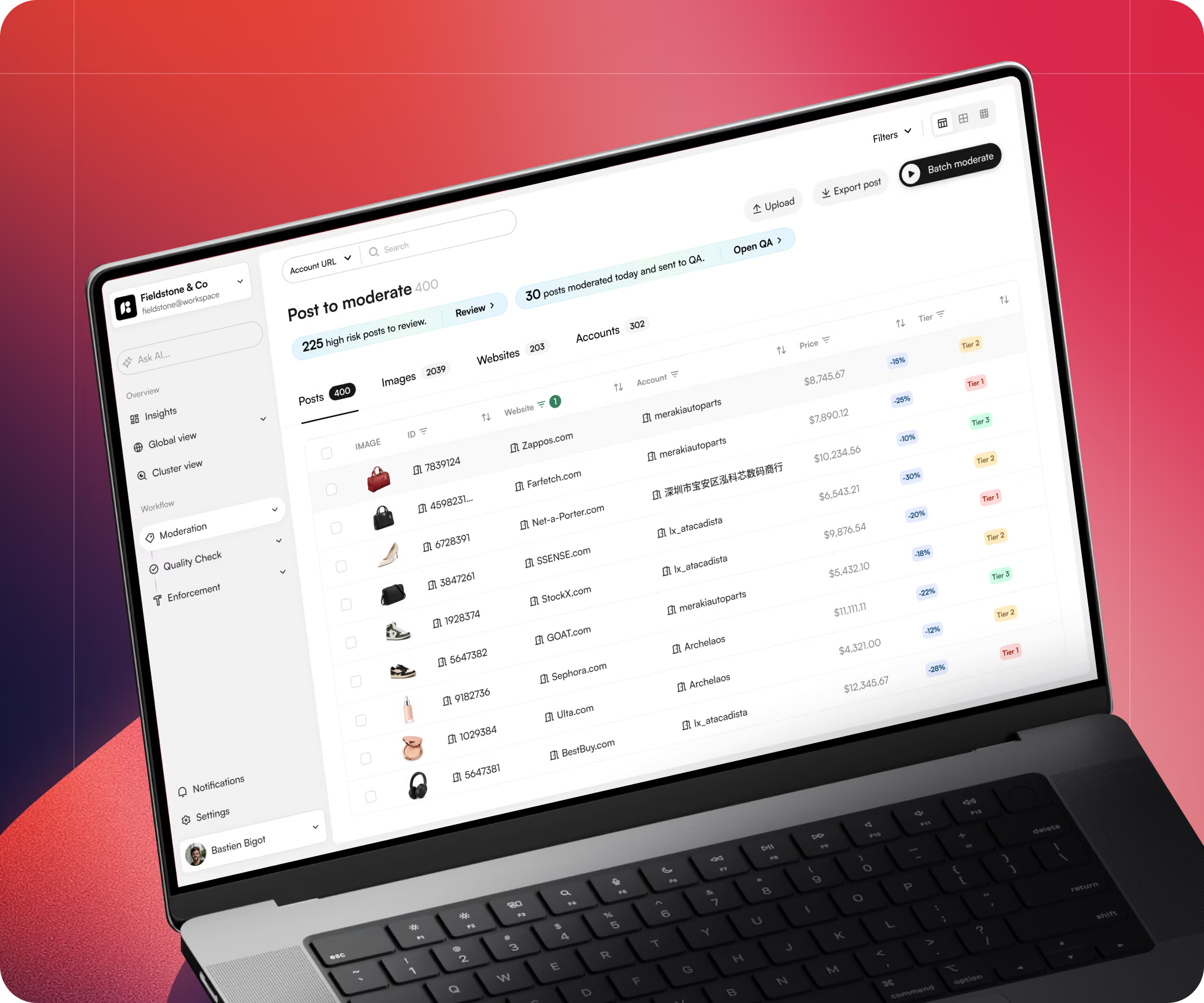
What a Multi-Discipline Agency Offers That Pure Brand Studios Don't
Everything above points to the same thing. Startups need a brand that ships fast, connects to product, and doesn't fall apart when it hits the app. Pure brand studios stop at the guide. Product-only agencies skip the identity work. Founders end up managing two vendors and one gap between them.
We built our practice to close that gap. As a Montreal-based UX and product design agency, we work with founders, startups, and enterprise companies to design and ship digital products end to end. Clients engage us for app design, website design, branding, and ongoing design support, and we operate as an embedded design pod, plugging into a team quickly and delivering across UX, UI, motion, and visual QA under a single engagement.
That's what makes the speed possible (weekly sprints, days to first deliverable). It's what makes the brand-to-product handoff seamless (same team, same engagement). It's what makes the scope flexible (sprint, fixed, or retainer, whichever fits your stage). It's why the majority of our 400+ projects have been for startups and founders, alongside enterprise clients like Apple, TELUS, Red Bull, and Netflix. And it's why Vivodyne's redesign preceded a $38M raise.
If your brand needs to live inside a product from day one, get in touch and we'll walk you through what that looks like.
Key Takeaways
- Enterprise branding processes don't map to startups. You need speed, flexibility, and a brand that ships into product from day one.
- Portfolio fit matters more than portfolio prestige. Look for case studies at your stage with documented outcomes.
- The single biggest gap in most agency work is the handoff from brand to product. Agencies that cover both close that gap.
- Engagement model shapes cost, speed, and involvement. Sprint, fixed-scope, and retainer each fit different startup moments.
- A logo is not a brand. Get a clear scope of everything the engagement produces before you sign.
- Third-party validation (Clutch reviews, references, documented case studies) tells you more than the pitch deck does.
- Budget to the scope you actually need for the next raise, not the cheapest option on the table.
FAQs
What should a startup look for in a branding agency?
Look for a portfolio that includes companies at your stage, a clear engagement model with defined deliverables and timelines, and evidence that their brand work holds up inside a digital product. Third-party reviews on platforms like Clutch are more reliable than portfolio curation alone.
How long does startup branding typically take?
A focused brand sprint can produce a core identity system in two to four weeks. A full brand and product design engagement covering visual identity, design system, and UI application will take longer. Ask for a specific timeline tied to specific deliverables before you sign.
Should a branding agency also understand product design?
For most startups, yes. If your brand needs to live inside an app or a SaaS product, an agency that only delivers identity assets will leave a gap between your visual brand and your product experience. At Orizon, we cover both under one engagement to close that gap.
What's the difference between a brand system and a brand guide?
A brand system is the full set of assets and rules governing how your brand appears across every touchpoint: logo variants, color, typography, iconography, motion, and component-level guidance for your product. A brand guide documents those rules. You need both, but the system is what your design and dev teams will actually use day to day.
How do I evaluate an agency's Clutch reviews?
Look for specificity. Reviews that mention timelines, deliverables, and outcomes are more useful than general praise. Pay attention to volume, and notice whether any reviews mention areas for improvement. A pattern of similar feedback across multiple clients is a reliable signal.
When is the right time for a startup to invest in branding?
The most common triggers are a funding close, a competitive threat, or preparation for the next raise. If your product is shipping but your brand feels inconsistent across your app, website, and marketing, that's also a clear signal. Waiting until Series B to address a weak brand means rebuilding something that's already been in front of users and investors.
What happens if I need branding and product design at the same time?
Look for an agency that covers both disciplines under one engagement. Managing a brand studio and a product design agency simultaneously creates coordination overhead and increases the risk of inconsistency between your identity and your product experience.
Is Orizon a good branding agency for startups?
We work with founders and startups across app design, website design, branding, and ongoing design support, operating as an embedded design pod that spans UX, UI, motion, and visual QA. That single-engagement model is a fit for startups that need a brand system and a shippable product from the same team. Get in touch if you want to see whether it fits your stage.
What questions should I ask a branding agency before signing?
Ask what the first two weeks look like, who exactly will work on your account, how they handle brand work extending into product, what happens if you change direction after the first round, and their typical time from signed contract to first deliverable. Vague answers here usually mean vague delivery later.
How do I book a call with Orizon to discuss my startup brand?
You can book a call with us directly to talk through your brand, timeline, and what a first engagement could look like.
Header image: Photo by Jordan Jenkins – “Trade Brand Book” (Dribbble Shot #17790846).

Keep Reading
More from Orizon

Let's Talk
Design done right and fast by
people you can trust.


%20(1).avif)




.svg)


.svg)